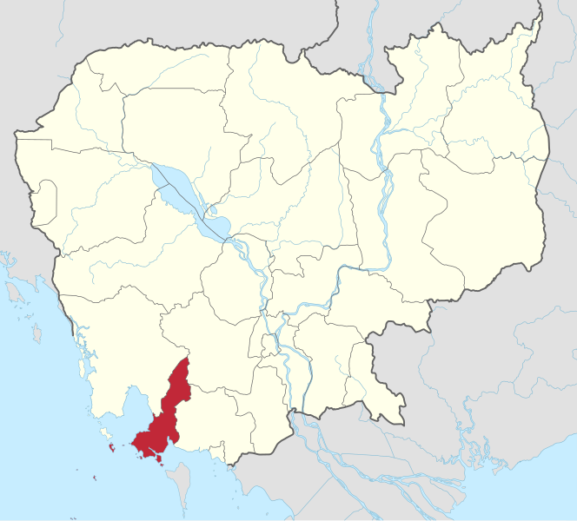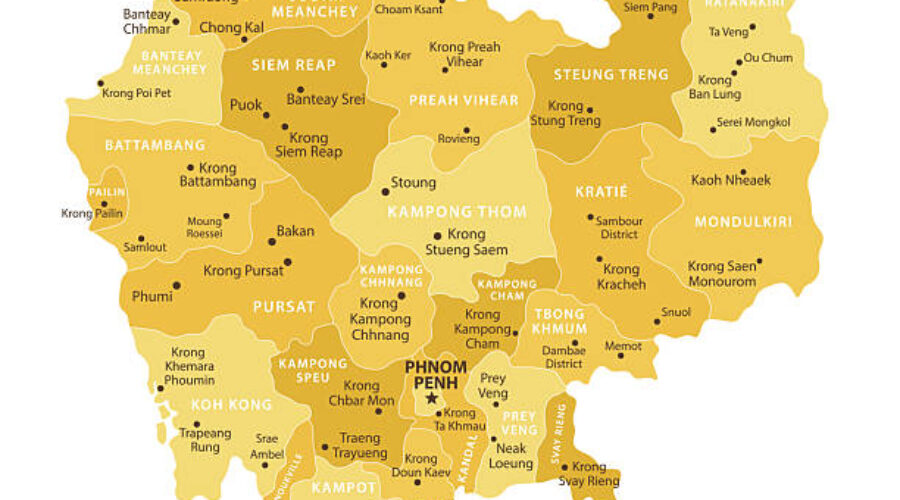
Cambodia
Cambodia: Complete History, Culture and Tourist Attractions
1. Introduction to Cambodia
The Kingdom of Cambodia is a fascinating country in mainland Southeast Asia, known for its ancient Khmer civilization, magnificent temples, Buddhist traditions, tropical landscapes, rich culture, and welcoming people.
Cambodia is bordered by Thailand to the west and northwest, Laos to the north, Vietnam to the east and southeast, and the Gulf of Thailand to the southwest. The country covers approximately 181,035 square kilometers. Its major geographical features include the Mekong River, Tonlé Sap Lake, the Bassac River system, extensive lowlands, mountains, forests, and a southern coastline.
Cambodia’s greatest attraction is its extraordinary historical heritage. The country was the heartland of the Khmer Empire, one of the most influential civilizations in Southeast Asia. Its legacy can be seen in magnificent temples such as Angkor Wat, Bayon, Ta Prohm, Preah Vihear, Sambor Prei Kuk, and Koh Ker.
However, Cambodia is much more than ancient temples. Travelers can also discover vibrant cities, peaceful countryside, tropical islands, beaches, waterfalls, mountains, floating villages, wildlife, traditional crafts, Cambodian cuisine, Buddhist monasteries, and fascinating local communities.
2. Cambodia’s Geography
Cambodia is located in the heart of mainland Southeast Asia.
Its geographical position has played an important role in its history because the country lies between several major civilizations and trade routes.
Cambodia’s landscape can broadly be divided into:
- Central lowlands
- Mekong River basin
- Tonlé Sap basin
- Northern and eastern highlands
- Cardamom and Elephant mountain ranges
- Coastal areas
- Tropical forests
- Islands and beaches
The Mekong River runs through Cambodia and has supported agriculture, transportation, fishing, trade, and settlement for centuries.
The Tonlé Sap Lake is another defining feature of the country. It is closely connected to Cambodia’s agriculture, fishing communities, biodiversity, and traditional way of life.
Cambodia’s geographical diversity is one reason the country can offer such a wide variety of tourism experiences.
3. The Earliest History of Cambodia
Cambodia has a very long human history.
Archaeological evidence indicates that people lived in the region thousands of years ago. Early communities practiced agriculture, fishing, hunting, pottery production, and metalworking.
Over time, settlements became larger and more organized, eventually developing into early states and kingdoms.
The development of agriculture, particularly rice cultivation, was extremely important because it allowed communities to support larger populations.
The waterways of the Mekong and Tonlé Sap also provided food, transportation, and connections between different communities.
4. Funan – One of the Earliest Major Kingdoms
One of the earliest major states associated with the region was Funan, which flourished during the first centuries of the Common Era.
Funan developed important trade connections with India, China, and other parts of Southeast Asia.
Indian cultural influences became particularly important during this period.
These influences included:
- Hinduism
- Buddhism
- Sanskrit language and literature
- Indian artistic traditions
- Political concepts
- Religious architecture
- Writing systems
However, the cultures of the region did not simply copy India. Local traditions blended with outside influences to create distinctive early Khmer culture.
Funan was particularly important because of its maritime trade networks and connections with the wider Asian world.
5. Chenla – The Development of Early Khmer Civilization
After Funan, several political centers developed in the region commonly associated with Chenla.
The Chenla period was particularly important because it helped establish the foundations of the civilization that later became the Khmer Empire.
One of the most important archaeological sites from this period is Sambor Prei Kuk, the ancient city of Ishanapura.
Sambor Prei Kuk flourished during the late 6th and early 7th centuries and contains an extraordinary collection of brick temples. UNESCO recognizes the site for its importance to the development of early Khmer architecture and art.
The architectural traditions developed at Sambor Prei Kuk later influenced the great temple architecture of the Angkor period.
6. The Birth of the Khmer Empire
The Khmer Empire emerged in the early 9th century and became one of the most powerful civilizations in Southeast Asia.
King Jayavarman II is traditionally associated with the establishment of the Khmer Empire.
Under successive kings, the Khmer state expanded and developed increasingly sophisticated systems of government, agriculture, religion, architecture, and water management.
The empire eventually became centered around the region of Angkor, in present-day Siem Reap Province.
7. The Angkor Civilization
The Angkor period represents the golden age of Khmer civilization.
From approximately the 9th to the 15th centuries, Angkor developed into an enormous political, religious, economic, and urban center.
The archaeological area covers approximately 400 square kilometers and contains temples, reservoirs, canals, roads, urban remains, and other structures.
Angkor was not simply a collection of temples.
It was a complex civilization with:
- Royal cities
- Religious centers
- Agricultural systems
- Reservoirs
- Canals
- Roads
- Hospitals
- Rest houses
- Workshops
- Markets
- Residential communities
The extraordinary water-management system helped support the large population of Angkor.
8. King Suryavarman II and Angkor Wat
One of the most famous Khmer kings was King Suryavarman II.
He ruled during the early 12th century and is best known for commissioning Angkor Wat.
Originally dedicated to the Hindu god Vishnu, Angkor Wat was designed as a representation of the sacred Mount Meru.
Its five central towers symbolize the peaks of Mount Meru.
The temple’s galleries contain extraordinary bas-reliefs depicting Hindu mythology, historical scenes, battles, celestial beings, and ancient Khmer society.
Today, Angkor Wat is Cambodia’s most famous attraction and one of the world’s greatest monuments.
Angkor was inscribed on the UNESCO World Heritage List in 1992.
9. King Jayavarman VII
Another extraordinary ruler was King Jayavarman VII, one of the most important kings in Khmer history.
He ruled during the late 12th and early 13th centuries.
He was a major patron of Mahayana Buddhism and commissioned many important monuments.
His achievements included:
- Angkor Thom
- Bayon
- Ta Prohm
- Preah Khan
- Neak Pean
- Banteay Kdei
He also developed roads, bridges, hospitals, and rest houses throughout the empire.
The famous stone faces of Bayon are closely associated with the artistic and religious vision of his reign.
10. The Decline of Angkor
The decline of Angkor was a complex historical process rather than the result of one single event.
Possible contributing factors include:
- Political conflicts
- Changes in regional trade
- Environmental pressures
- Water-management challenges
- Military conflicts
- Shifting centers of economic power
- The increasing importance of Theravada Buddhism
By the 15th century, Cambodia’s political center had moved away from Angkor.
However, Angkor did not simply disappear.
Many temples continued to be used as religious sites, and local communities remained connected to the area.
11. Cambodia’s Later Kingdoms
After the decline of Angkor, Cambodia experienced several centuries of political change.
The capital moved to different locations, including areas around:
- Longvek
- Oudong
- Phnom Penh
Cambodia faced pressure from neighboring kingdoms and experienced periods of conflict and political instability.
At the same time, Cambodian culture, Buddhism, language, traditional arts, agriculture, and social institutions continued to develop.
12. Phnom Penh Becomes the Capital
Phnom Penh became the permanent capital in 1866 during the reign of King Norodom.
Its location near the meeting of the Mekong, Tonlé Sap, and Bassac waterways made it an important center for administration and trade.
The city gradually developed roads, markets, government institutions, royal buildings, schools, and commercial districts.
Today, Phnom Penh is Cambodia’s political, economic, cultural, and administrative center.
13. The French Protectorate and Colonial Period
Cambodia entered the French protectorate period in the 19th century.
French influence significantly affected Cambodia’s administration and urban development.
Phnom Penh experienced major changes during this period, including:
- Modern roads
- Public buildings
- Administrative institutions
- Schools
- Markets
- Urban planning
- Colonial architecture
The combination of Khmer and French architectural traditions can still be seen in Phnom Penh today.
14. Cambodia’s Independence
Cambodia achieved independence from France in 1953.
The post-independence period was an important era of national development.
Phnom Penh developed as a modern capital, while Cambodian arts, architecture, education, music, cinema, and culture experienced significant growth.
The period is often remembered for its distinctive modern Cambodian architecture and cultural creativity.
15. The Khmer Rouge Period
Cambodia experienced one of the darkest periods in its modern history under the Khmer Rouge from 1975 to 1979.
The population of Phnom Penh was forcibly evacuated, and Cambodia experienced enormous loss of life and destruction of social, cultural, educational, and economic institutions.
Important memorial sites such as:
- Tuol Sleng Genocide Museum
- Choeung Ek Genocidal Center
preserve evidence and memories of this tragic period.
In 2025, the Cambodian Memorial Sites were added to the UNESCO World Heritage List as places of remembrance, peace, and reflection.
16. Cambodia’s Reconstruction
Following the end of the Khmer Rouge period, Cambodia began a long process of rebuilding.
The country gradually restored:
- Government institutions
- Education
- Healthcare
- Infrastructure
- Agriculture
- Tourism
- Cultural heritage
- International relations
Tourism became an increasingly important part of Cambodia’s economic development.
The Ministry of Tourism was re-established in 1993 as part of efforts to restore and develop the country’s tourism sector after years of conflict.
17. Cambodia Today
Modern Cambodia is a rapidly developing country while maintaining a strong connection to its historical and cultural traditions.
Phnom Penh has developed into a modern capital with:
- High-rise buildings
- Shopping centers
- Hotels
- Restaurants
- Universities
- Businesses
- Modern transportation
At the same time, Cambodia’s countryside continues to preserve traditional lifestyles based around agriculture, fishing, Buddhist temples, villages, and local communities.
Tourism remains an important part of Cambodia’s international identity.
18. Cambodia’s Five UNESCO World Heritage Properties
Cambodia currently has five properties inscribed on the UNESCO World Heritage List.
They are:
1. Angkor
Located in Siem Reap Province, Angkor contains the remains of the great Khmer capitals and includes Angkor Wat, Bayon, Ta Prohm, Preah Khan, and many other monuments.
2. Temple of Preah Vihear
Located on the Dangrek Mountains near the Thai border, Preah Vihear is a spectacular Khmer temple complex known for its architecture, religious significance, and dramatic mountain setting.
3. Temple Zone of Sambor Prei Kuk
This ancient Chenla capital contains remarkable pre-Angkorian brick temples and represents an important stage in the development of Khmer architecture.
4. Koh Ker
Koh Ker was an important Khmer capital for a relatively short period during the 10th century.
Its spectacular pyramid temple, Prasat Thom, and numerous surrounding monuments make it one of Cambodia’s most fascinating archaeological destinations.
Koh Ker was added to the UNESCO World Heritage List in 2023.
5. Cambodian Memorial Sites
These include important sites connected with the Khmer Rouge period and are recognized as places of remembrance and reflection.
19. Major Historical Attractions in Cambodia
Angkor Wat
The country’s most famous monument and a masterpiece of Khmer architecture.
Highlights include:
- Five towers
- Giant moat
- Long causeway
- Bas-reliefs
- Apsaras
- Central sanctuary
- Sunrise experience
Angkor Thom
The last great capital of the Khmer Empire.
Highlights include:
- South Gate
- Bayon Temple
- Baphuon
- Terrace of the Elephants
- Terrace of the Leper King
Bayon Temple
Famous for its enormous carved stone faces and detailed historical bas-reliefs.
Ta Prohm
Famous for ancient trees and roots growing among the temple ruins.
Banteay Srei
A beautiful temple famous for its exceptionally delicate pink sandstone carvings.
Preah Khan
A large temple complex with impressive corridors, towers, carvings, and jungle surroundings.
Beng Mealea
A mysterious temple complex surrounded by forest and famous for its atmospheric ruins.
Koh Ker
An ancient royal capital featuring Prasat Thom, a massive temple pyramid, and numerous surrounding temples.
Preah Vihear
A spectacular mountain temple with long architectural terraces and extraordinary views across the Cambodian landscape.
Sambor Prei Kuk
A pre-Angkorian temple complex containing numerous brick sanctuaries and distinctive early Khmer architecture. UNESCO identifies it as the ancient capital of Ishanapura.
20. Phnom Penh Attractions
Cambodia’s capital offers a completely different tourism experience from Siem Reap.
Major attractions include:
Royal Palace
A magnificent complex associated with the Cambodian monarchy.
Silver Pagoda
An important Buddhist and royal religious site within the Royal Palace complex.
National Museum of Cambodia
Home to an important collection of Khmer sculptures and cultural artifacts.
Wat Phnom
A historic temple strongly connected with the traditional founding story of Phnom Penh.
Independence Monument
A major symbol of Cambodia’s independence.
Tuol Sleng Genocide Museum
An important historical and memorial site.
Choeung Ek
A memorial and place of reflection connected to the Khmer Rouge period.
Central Market
A famous market and architectural landmark.
Riverside
A popular place for walking, dining, sightseeing, and river cruises.
21. Siem Reap Attractions
Siem Reap is Cambodia’s most famous cultural tourism destination.
Major attractions include:
- Angkor Wat
- Angkor Thom
- Bayon
- Ta Prohm
- Banteay Srei
- Preah Khan
- Neak Pean
- Phnom Bakheng
- Roluos Group
- Beng Mealea
- Phnom Kulen
- Kulen Waterfall
- River of a Thousand Lingas
- Kampong Phluk
- Tonlé Sap Lake
- Angkor National Museum
- Cambodian cultural performances
- Local markets
- Cambodian cooking experiences
Angkor itself extends over approximately 400 square kilometers and includes temples, reservoirs, canals, roads, and remains of ancient urban settlements.
22. Tonlé Sap Lake
Tonlé Sap is one of Cambodia’s most important natural and cultural attractions.
The lake supports fishing communities and plays an important role in Cambodia’s ecology and economy.
Visitors can explore communities such as:
- Kampong Phluk
- Kampong Khleang
Depending on the season, travelers can see:
- Floating houses
- Stilted houses
- Fishing boats
- Local markets
- Flooded forests
- Fishing activities
- Traditional lakeside lifestyles
Tonlé Sap provides visitors with a fascinating insight into how Cambodian communities have adapted to seasonal changes in water levels.
23. Phnom Kulen
Phnom Kulen is one of Cambodia’s most important sacred and natural landscapes.
It offers:
- Waterfalls
- Forest
- Ancient carvings
- River of a Thousand Lingas
- Reclining Buddha
- Mountain scenery
- Religious sites
It is particularly suitable for travelers who want to combine nature, history, and spirituality.
24. Cambodia’s Coastal Attractions
Cambodia has a beautiful coastline along the Gulf of Thailand.
Important coastal destinations include:
- Sihanoukville
- Kep
- Kampot
- Koh Rong
- Koh Rong Sanloem
- Koh Ta Kiev
- Koh Thmei
Visitors can enjoy:
- Beaches
- Islands
- Swimming
- Snorkeling
- Diving
- Seafood
- Sunsets
- Boat trips
- Relaxation
Cambodia’s Ministry of Tourism highlights its coastal areas and islands as important components of the country’s tourism offering.
25. Kampot
Kampot is a charming destination known for its relaxed atmosphere and beautiful natural surroundings.
Important attractions include:
- Kampot River
- Bokor Mountain
- Pepper plantations
- Countryside
- Traditional villages
- Caves
- Waterfalls
- Colonial-era buildings
Kampot is particularly famous internationally for its pepper, which is an important Cambodian agricultural product.
26. Kep
Kep is a small coastal destination famous for:
- Fresh seafood
- Kep Crab
- Beaches
- Coastal scenery
- Kep National Park
- Rabbit Island
- Relaxed atmosphere
A visit to Kep is ideal for travelers who want to combine Cambodia’s coastal landscape with local food.
27. Bokor Mountain
Bokor Mountain is located in Preah Monivong National Park.
The area is known for:
- Mountain scenery
- Forest
- Waterfalls
- Panoramic views
- Historic buildings
- Wat Sampov Pram
- Cool mountain climate
Bokor offers a very different landscape from Cambodia’s lowland temple regions.
28. Koh Rong and Koh Rong Sanloem
These islands are among Cambodia’s most popular tropical destinations.
Visitors can enjoy:
- White-sand beaches
- Clear water
- Swimming
- Snorkeling
- Diving
- Boat trips
- Island sunsets
- Relaxation
They are excellent destinations for travelers who want to combine cultural sightseeing with a beach holiday.
29. Cambodia’s Northeast
Cambodia’s northeastern provinces offer some of the country’s most impressive natural and wildlife experiences.
Important destinations include:
- Mondulkiri
- Ratanakiri
- Virachey National Park
- Sen Monorom
- Banlung
- Bou Sra Waterfall
- Yak Loum Lake
The region is known for:
- Forests
- Waterfalls
- Wildlife
- Mountains
- Indigenous communities
- Eco-tourism
- Adventure travel
30. Mondulkiri
Mondulkiri is famous for its rolling hills, forests, waterfalls, and cooler climate.
Major attractions include:
- Bou Sra Waterfall
- Forest landscapes
- Elephant conservation experiences
- Indigenous communities
- Mountain viewpoints
- Rural villages
Mondulkiri is particularly attractive for nature lovers and travelers seeking a quieter experience.
31. Ratanakiri
Ratanakiri is known for its red-earth landscapes, forests, lakes, waterfalls, and ethnic diversity.
Major attractions include:
- Yeak Laom Lake
- Ka Chanh Waterfall
- Kachang Waterfall
- Virachey National Park
- Traditional villages
- Local handicrafts
It is one of Cambodia’s best regions for nature and community-based tourism.
32. Cambodia’s National Parks and Wildlife
Cambodia contains extensive forests and protected areas.
Important natural destinations include:
- Cardamom Mountains
- Botum Sakor National Park
- Kirirom National Park
- Ream National Park
- Preah Monivong National Park
- Virachey National Park
Visitors can experience:
- Hiking
- Birdwatching
- Wildlife
- Waterfalls
- Forests
- Eco-tourism
- Community tourism
Nature tourism is an increasingly important part of Cambodia’s tourism industry. The Ministry of Tourism highlights national parks, waterfalls, beaches, and islands among the country’s major tourism assets.
33. Cambodia’s Rivers
Rivers have always been central to Cambodian life.
The most important waterways include:
- Mekong River
- Tonlé Sap River
- Bassac River
- Stung Sen
- Other regional rivers
Rivers support:
- Fishing
- Agriculture
- Transportation
- Trade
- Local communities
- Tourism
A river cruise is an excellent way to experience Cambodia’s landscape and traditional riverside communities.
34. Cambodian Buddhism
Theravada Buddhism is the dominant religion in Cambodia.
Buddhist temples can be found throughout the country.
Visitors can experience:
- Pagodas
- Monks
- Buddhist ceremonies
- Meditation
- Religious festivals
- Traditional offerings
- Buddhist architecture
Important temples include:
- Wat Phnom
- Wat Ounalom
- Silver Pagoda
- Rural Buddhist pagodas
- Temple complexes throughout Siem Reap
Religion remains an important part of everyday Cambodian life.
35. Cambodian Traditional Culture
Cambodian culture has developed over many centuries.
Important cultural traditions include:
- Khmer classical dance
- Apsara dance
- Traditional music
- Shadow puppetry
- Buddhist ceremonies
- Traditional weddings
- Village festivals
- Handicrafts
- Silk weaving
- Stone carving
- Wood carving
The cultural heritage of Angkor continues to influence modern Cambodian art and national identity.
36. Cambodian Festivals
Cambodia has many important traditional festivals.
Major celebrations include:
Khmer New Year
Usually celebrated in April, Khmer New Year is one of the country’s biggest annual celebrations.
Families gather, visit pagodas, make offerings, play traditional games, and celebrate together.
Pchum Ben
An important Buddhist religious period when Cambodians honor deceased relatives and ancestors.
Water Festival
The Bon Om Touk Water Festival celebrates the reversal of the Tonlé Sap River and traditionally includes boat races and riverside celebrations.
Royal Ploughing Ceremony
An ancient agricultural ceremony connected with the beginning of the rice-growing season.
37. Cambodian Cuisine
Food is one of the best ways to experience Cambodia.
Important Cambodian dishes include:
Fish Amok
A famous Khmer dish combining fish, coconut milk, herbs, and traditional Cambodian spices.
Beef Lok Lak
Tender beef served with vegetables and a distinctive Cambodian dipping sauce.
Khmer Red Curry
A rich but generally less spicy curry than many neighboring Southeast Asian varieties.
Bai Sach Chrouk
Grilled pork served with rice and commonly eaten as a breakfast dish.
Khmer Noodles
A traditional noodle dish with fresh vegetables and herbs.
Fresh and Grilled Seafood
Especially popular in coastal destinations such as Kep and Sihanoukville.
Cambodian cuisine reflects the country’s agricultural, river, and coastal environments.
38. Cambodian Handicrafts
Cambodia has a long tradition of craftsmanship.
Visitors can discover:
- Silk weaving
- Cotton weaving
- Basketry
- Pottery
- Wood carving
- Stone carving
- Silverwork
- Painting
- Traditional sculpture
Buying locally made handicrafts can help support Cambodian artisans and preserve traditional skills.
39. Cambodia’s Countryside
For many travelers, Cambodia’s countryside is one of the most memorable parts of the country.
Outside the major cities, visitors can see:
- Rice fields
- Sugar palm trees
- Wooden houses
- Buddhist pagodas
- Water buffalo
- Small farms
- Rural markets
- Villages
- Traditional fishing communities
A countryside experience allows travelers to see a more peaceful and traditional side of Cambodia.
40. Cambodia for Different Types of Travelers
Cambodia offers experiences suitable for many different travelers.
History Lovers
Best destinations:
- Angkor
- Koh Ker
- Sambor Prei Kuk
- Preah Vihear
- Phnom Penh museums
Culture Lovers
Best experiences:
- Cambodian dance
- Buddhist temples
- Local villages
- Handicrafts
- Food experiences
- Festivals
Nature Lovers
Best destinations:
- Mondulkiri
- Ratanakiri
- Cardamom Mountains
- Bokor
- Phnom Kulen
- National parks
Beach Lovers
Best destinations:
- Koh Rong
- Koh Rong Sanloem
- Kep
- Sihanoukville
Adventure Travelers
Activities include:
- Hiking
- Cycling
- Jungle exploration
- Kayaking
- Boat trips
- Waterfalls
- Island adventures
Spiritual Travelers
Experiences include:
- Buddhist temples
- Meditation
- Sacred mountains
- Ancient temples
- Religious ceremonies
41. A Suggested Cambodia Travel Experience
A well-designed Cambodia tour can combine the country’s most important experiences.
Day 1 – Phnom Penh
Explore:
- Royal Palace
- Silver Pagoda
- National Museum
- Wat Phnom
- Riverside
Day 2 – Phnom Penh History and Culture
Visit:
- Tuol Sleng
- Choeung Ek
- Central Market
- Independence Monument
Day 3 – Phnom Penh to Siem Reap
Travel through the Cambodian countryside and experience rural landscapes.
Day 4 – Angkor Wat and Angkor Thom
Explore:
- Angkor Wat
- South Gate of Angkor Thom
- Bayon
- Baphuon
- Terrace of the Elephants
Day 5 – Ta Prohm and Banteay Srei
Explore:
- Ta Prohm
- Preah Khan
- Neak Pean
- Banteay Srei
Day 6 – Phnom Kulen
Visit:
- Kulen Mountain
- Waterfall
- River of a Thousand Lingas
- Reclining Buddha
Day 7 – Tonlé Sap
Explore:
- Kampong Phluk or Kampong Khleang
- Boat trip
- Floating or stilted villages
- Sunset experience
For a longer journey, travelers can continue to Battambang, Kampong Thom, Koh Ker, Preah Vihear, Kampot, Kep, Mondulkiri, Ratanakiri, or Cambodia’s islands.
42. Why Visit Cambodia?
Cambodia is an extraordinary destination because it brings together history, culture, nature, spirituality, adventure, food, and hospitality in one country.
A traveler can experience an ancient civilization in the morning, explore a traditional village in the afternoon, watch the sunset over a tropical island in the evening, and enjoy delicious Khmer cuisine at night.
The country’s greatest strengths include:
- Angkor Wat and the Angkor civilization
- Ancient Khmer temples
- Royal heritage
- Buddhist culture
- Tonlé Sap Lake
- Mekong River
- Tropical islands
- Beaches
- Mountains
- Waterfalls
- National parks
- Traditional villages
- Cambodian cuisine
- Arts and handicrafts
- Warm hospitality
Cambodia’s official tourism information similarly emphasizes the country’s combination of history, culture, natural beauty, national parks, beaches, islands, cuisine, and cultural experiences.
Conclusion
Cambodia – A Journey Through History, Culture and Nature
Cambodia is much more than a country famous for Angkor Wat.
It is a land shaped by thousands of years of history, from early settlements and the ancient kingdoms of Funan and Chenla to the extraordinary achievements of the Khmer Empire, the later Cambodian kingdoms, the colonial period, independence, the difficult years of conflict, and the country’s continuing development today.
The magnificent temples of Angkor demonstrate the extraordinary achievements of the ancient Khmer civilization. Phnom Penh reveals Cambodia’s royal, colonial, modern, and twentieth-century history. Tonlé Sap and the Mekong demonstrate the importance of water to Cambodian life. Phnom Kulen, Mondulkiri, Ratanakiri, the Cardamom Mountains, Kampot, Kep, and Cambodia’s islands reveal the country’s extraordinary natural diversity.
Most importantly, Cambodia is a country where ancient heritage and modern life exist side by side.
From the sunrise over Angkor Wat to the peaceful countryside, from Buddhist pagodas to bustling markets, from ancient temples to tropical beaches, Cambodia offers travelers an experience that combines education, adventure, relaxation, spirituality, culture, and unforgettable memories.
Cambodia is not simply a destination to visit—it is a country to discover, experience, and understand.
For tour programs, the strongest approach is to present Cambodia through four major experiences:
Ancient Khmer Heritage → Royal & Modern History → Khmer Culture & Local Life → Nature, Islands & Adventure.
This gives travelers a complete understanding of Cambodia rather than focusing only on Angkor Wat.
Explore Angkor. Discover Cambodia. Travel Your Way.
Angkor Transport Services
Private Transportation | Airport Transfers | Private Tours | Accessible Travel | Yoga & Wellness | Sunset Boat Experiences | Cambodia Journeys
Visit Angkor Transport Services
Let us help you discover Cambodia with confidence, comfort, and genuine local hospitality.
ATS Experiences:
- Airport & Transfer
- Accessible Travel
- Half Day Tours
- Private Tours
- Yoga Tours
- Sunset Boat Ride
- Multi-Day Journey
Plan Your Trip with Angkor Transport Services. Explore Cambodia your way with airport transfers, private tours, yoga tours, accessible travel, sunset boat ride and trusted transportation services.
Featured Services:
- Airport Welcome Transfer — SAI Airport to Siem Reap Hotel
- Private Transfer from Hotel in Siem Reap to SAI Airport
- Private Transfer from Hotel in Siem Reap to Hotel in Phnom Penh or Other Provinces
- Angkor Gondola Boat Ride – Sunset Experience at Tonle Om
- 2-Day Private Siem Reap Accessible Heritage & Cultural Experience
- 3-Day Private Siem Reap Yoga & Wellness Retreat
- 2-Day Premium Angkor Heritage & Kulen Spiritual Nature Experience (Indian Travelers)
- 3-Day Cambodia Signature Journey: Angkor Heritage, Phnom Kulen & Tonle Sap
- 2-Day Private Angkor Heritage & Phnom Kulen Experience
- Full Day Private Beng Mealea, Kampong Phluk & Tonle Sap Sunset Experience
- 2-Day Private Angkor Temples, Beng Mealea & Tonle Sap Experience
- Full Day Private Koh Ker & Beng Mealea Ancient Temple Experience
- Beyong Angkor: Banteay Srey & Beng Mealea Day Tour
- Half Day Private Kampong Phluk Village & Tonle Sap Sunset Experience
- Full Day Private Phnom Kulen Nature & Cultural Experience
- Full Day Private Angkor Grand Circuit & Sunset Experience
- Half Day Sunrise at Angkor Wat & Its Complex
- Full Day Private Angkor Temple Experience