Sihanoukville
Sihanoukville: History and Major Attractions
1. Introduction
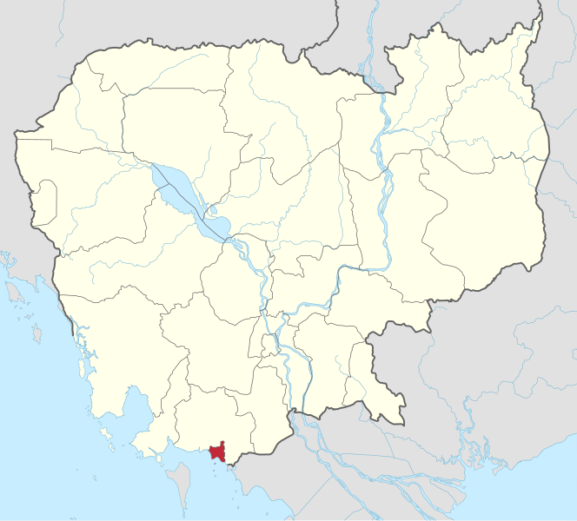
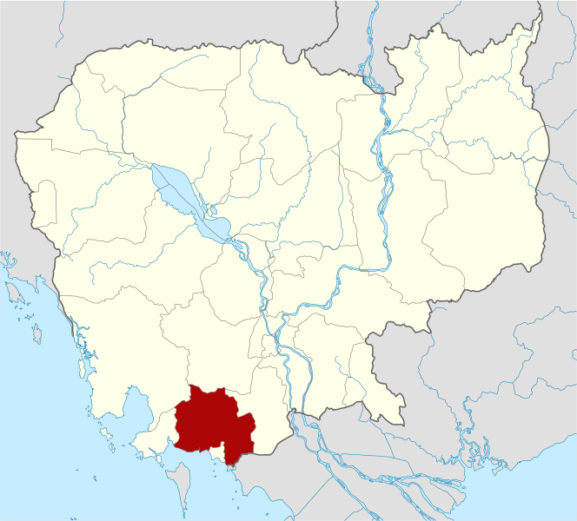
Sihanoukville, also known as Kampong Som or Kampong Saom, is a coastal city in southwestern Cambodia on the Gulf of Thailand. It is the capital of Preah Sihanouk Province and is distinguished from many other Cambodian cities by its combination of a deep-water port, sandy beaches, tropical islands, forests, temples, and rapidly developing urban areas.
Unlike Cambodia’s ancient cities such as Siem Reap and Angkor, Sihanoukville is a relatively modern city. Its development is closely connected with Cambodia’s independence, the modernization policies of the 1950s and 1960s, and the country’s need for an international seaport.
2. History of Sihanoukville
Before the development of the modern city
The area around present-day Sihanoukville had coastal settlements and fishing communities long before the modern city was established. The broader Cambodian coast was connected with fishing, agriculture, maritime trade, and contact with neighboring regions.
However, unlike Phnom Penh or Angkor, there was no major urban center at Sihanoukville before the twentieth century. The modern development of the city occurred mainly after Cambodia became independent from France.
1953: Cambodia gains independence
A major turning point in Cambodia’s modern history was independence from France in 1953. King Norodom Sihanouk played an important role in the independence movement and subsequently became the dominant political figure in Cambodia during much of the 1950s and 1960s.
After independence, Cambodia sought to strengthen its economic and political independence. One important challenge was the country’s lack of a modern deep-water port.
At that time, Cambodia depended heavily on transportation routes through neighboring countries for international trade. Developing its own seaport was therefore considered strategically and economically important.
1955–1960: Construction of the deep-water port
The construction of Sihanoukville’s port began in the mid-1950s. Tourism Cambodia records the port’s construction as taking place from approximately 1955 to 1960, with substantial French assistance, while the road connecting the new port to Phnom Penh was supported by the United States.
This project fundamentally changed the region.
A modern road was built to connect the coast with Phnom Penh, and the new port provided Cambodia with direct access to international maritime trade.
The development of the port effectively created the foundations of modern Sihanoukville.
The 1960s: Birth of a modern coastal city
During the 1960s, Sihanoukville developed rapidly.
The city was named Sihanoukville in honor of Prince Norodom Sihanouk. Tourism Cambodia describes the city as having been established as Cambodia’s deep-water port and notes that it reached an important period of growth during the 1960s.
The development was not limited to the port. The government also promoted Sihanoukville as a seaside destination.
Hotels, roads, restaurants and other facilities began appearing along the coast.
One of the most famous symbols of this period was the Independence Hotel, which opened in 1964 overlooking Independence Beach. Its development reflected the emergence of Sihanoukville as a modern seaside resort as well as a port city.
The 1960s therefore represent an important period in Sihanoukville’s history: the city began to function simultaneously as:
- An international port
- An industrial and commercial center
- A government development project
- A seaside resort
- A destination for domestic and international visitors
The 1970s: War and disruption
Cambodia’s peaceful development was interrupted by political instability and war.
In 1970, Prince Sihanouk was removed from power in a coup while he was abroad. Cambodia subsequently became increasingly involved in the wider conflicts associated with the Vietnam War.
The conflict eventually had a devastating effect on Sihanoukville and the rest of Cambodia.
When the Khmer Rouge took control of Cambodia in 1975, normal economic and tourist activities collapsed. The port and city were affected by the conflict, and the population experienced the extreme disruption and suffering that characterized the Khmer Rouge period.
The Independence Hotel, for example, was closed for more than two decades during the Khmer Rouge period and subsequent years of instability.
The 1980s–1990s: Recovery
After the fall of the Khmer Rouge regime and the gradual return of stability, Sihanoukville began rebuilding.
The port again became important to Cambodia’s economy, while tourism slowly returned to the beaches.
The establishment of Ream National Park in 1993 was also significant for the conservation and tourism potential of the surrounding coastal environment. The park protects a large area of coastal ecosystems, including beaches, mangroves, forests and marine environments.
During the 1990s and early 2000s, Sihanoukville increasingly became known internationally as Cambodia’s principal beach destination.
2000s to the present: Tourism and rapid urban development
In the twenty-first century, Sihanoukville experienced substantial economic and physical development.
The city increasingly attracted hotels, restaurants, businesses and large-scale investment. Tourism expanded, while the port became increasingly important to Cambodia’s international trade.
At the same time, rapid development significantly changed parts of the city’s landscape and character. Some traditional beach areas became more developed, while surrounding islands and coastal areas became increasingly important tourism destinations.
Today, Sihanoukville has two particularly important identities:
First, it is a major commercial and port center.
Second, it is the principal gateway to Cambodia’s southern islands and coastal tourism destinations.
3. Major Attractions of Sihanoukville
3.1 Ochheuteal Beach
Ochheuteal Beach is one of Sihanoukville’s best-known beaches.
It has traditionally been popular with both Cambodian visitors and international tourists. The beach is associated with swimming, relaxation, seafood restaurants and coastal recreation.
The long sandy coastline makes it particularly suitable for visitors who want a conventional beach experience without leaving the city.
3.2 Sokha Beach
Sokha Beach is another important beach in the city.
It is known for its sandy shoreline and relatively calm coastal environment and is associated with the Sokha Beach Resort.
The beach is particularly attractive for visitors interested in a resort-style seaside experience.
3.3 Independence Beach
Independence Beach has both tourism and historical significance.
It is associated with the Independence Hotel, one of the city’s most recognizable buildings from the early development of Sihanoukville’s tourism industry.
The hotel opened in 1964, making it an important reminder of the city’s emergence as a modern seaside resort during the 1960s.
4. Koh Rong
Koh Rong is one of the most famous attractions accessible from Sihanoukville.
The island lies in the Gulf of Thailand and is known for:
- White-sand beaches
- Clear tropical water
- Jungle landscapes
- Snorkeling
- Diving
- Boat trips
- Hiking
- Tropical marine life
Koh Rong’s combination of beaches and forest gives visitors an experience quite different from the more urban environment of Sihanoukville. Tourism Cambodia highlights the island’s beaches, jungle, snorkeling, diving and bioluminescent waters among its attractions.
For many visitors, Koh Rong is one of the principal reasons to visit the Sihanoukville area.
5. Koh Rong Sanloem
Koh Rong Sanloem is another major island destination.
Compared with Sihanoukville itself, the island offers a stronger sense of tropical-island scenery, with beaches, forests, bays and marine environments.
Among its attractions are:
- Saracen Bay
- M’Pai Bay
- Snorkeling
- Scuba diving
- Hiking
- Waterfalls
- Mangroves
- An old lighthouse
- Quiet beaches
Tourism Cambodia identifies Koh Rong Sanloem as an important diving destination and notes the presence of a lighthouse, waterfalls and mangrove areas.
6. Ream National Park
Ream National Park is one of the most important natural attractions near Sihanoukville.
The park contains a mixture of coastal forest, mangroves, beaches, waterways and marine environments.
It is particularly valuable for travelers interested in nature and wildlife rather than urban tourism.
What visitors can experience
- Coastal scenery
- Mangrove forests
- Tropical birds
- Fishing communities
- Beaches
- Forest landscapes
- Boat excursions
- Wildlife observation
Ream Beach, within the park, is less urbanized than the central beaches of Sihanoukville. Tourism Cambodia notes that mangroves behind the beach provide habitat for a variety of tropical birds and that the beach is frequented by local fishermen.
7. Kbal Chhay Waterfall
Kbal Chhay Waterfall is located north of central Sihanoukville and is a popular nature attraction.
The waterfall is formed by several water sources flowing down from the surrounding mountains.
Kbal Chhay has an interesting connection with the city’s modern history. Tourism Cambodia records that it was identified in 1960 and later considered as a source of water for Sihanoukville. Development was interrupted by the civil war before the site was subsequently developed for tourism.
The attraction is particularly pleasant during the wetter part of the year when water flow is stronger.
8. Wat Leu
Wat Leu is one of Sihanoukville’s most notable Buddhist temples.
The name Wat Leu means approximately “Upper Wat,” reflecting its position on elevated ground.
The temple is surrounded by trees and provides views over parts of Sihanoukville and the surrounding islands. Tourism Cambodia specifically highlights its hilltop setting and views.
For visitors, Wat Leu provides an opportunity to experience a side of Sihanoukville that is quite different from its beaches:
- Buddhist culture
- Khmer religious architecture
- Traditional religious practices
- Hilltop scenery
- Views of the city and coast
9. Wat Krom
Wat Krom is another important Buddhist site.
The name means “Lower Wat.” It is situated on a small hill overlooking the ocean and is associated with Ya-Mao, a local guardian deity.
The temple is interesting for visitors who want to understand Cambodia’s religious traditions and the mixture of Buddhist practice and local beliefs.
10. Sihanoukville’s seafood
Because the city is located directly on the Gulf of Thailand, seafood has long been an important part of its identity.
Popular dishes and ingredients include:
- Fresh fish
- Crab
- Prawns
- Squid
- Shellfish
- Grilled seafood
Fresh seafood served near the coast is one of the traditional tourism experiences associated with Sihanoukville.
11. Sihanoukville Port
The deep-water port is not simply an economic facility; it is also a fundamental part of Sihanoukville’s history.
The city essentially developed around the need to provide Cambodia with its own modern maritime gateway.
The port represents the transition of Cambodia from a largely land-based transport system toward greater participation in international maritime trade.
It also explains why Sihanoukville has a different urban character from many other Cambodian provincial cities: it was designed and developed as a modern port city during the post-independence period. Tourism Cambodia describes it as a port city constructed in the late 1950s and notes its more modern and urban character compared with many Cambodian towns.
12. Why Sihanoukville is historically important
Sihanoukville’s importance goes beyond its beaches.
It represents several important chapters in modern Cambodian history:
| Period | Importance |
|---|---|
| Before independence | Coastal settlements, fishing and maritime activity |
| 1953 | Cambodia gains independence from France |
| 1955–1960 | Construction of the deep-water port |
| 1960s | Rapid development of the port and seaside resort |
| 1964 | Independence Hotel opens |
| 1970s | War and political upheaval disrupt development |
| 1975–1979 | Khmer Rouge period brings severe disruption |
| 1980s–1990s | Gradual reconstruction and recovery |
| 1993 | Ream National Park established |
| 2000s | Tourism expands significantly |
| 2010s–2020s | Rapid urban, commercial and tourism development |
13. The special character of Sihanoukville
Sihanoukville is unusual because history, commerce, nature and tourism exist side by side.
A visitor can explore a Buddhist temple in the morning, visit a waterfall or national park during the day, enjoy fresh seafood in the afternoon, and travel by boat toward a tropical island.
Its attractions can therefore be divided into five broad categories:
Historical and cultural
- Wat Leu
- Wat Krom
- Independence Hotel and Independence Beach
- The history of the deep-water port
Beaches
- Ochheuteal Beach
- Sokha Beach
- Independence Beach
- Otres Beach
- Ream Beach
- Prek Treng Beach
Islands
- Koh Rong
- Koh Rong Sanloem
- Other smaller offshore islands
Nature
- Ream National Park
- Kbal Chhay Waterfall
- Mangrove forests
- Coastal ecosystems
Food and lifestyle
- Fresh seafood
- Local markets
- Beach restaurants
- Cambodian coastal cuisine
Conclusion
Sihanoukville is much more than a Cambodian beach resort. Its modern history began with Cambodia’s effort after independence to establish a modern deep-water port and strengthen its economic independence. The port stimulated the development of a new coastal city, while the beaches and hotels of the 1960s established its identity as a seaside destination.
Although war and the Khmer Rouge period interrupted its development, Sihanoukville gradually recovered and has since become an important center for maritime trade, tourism and access to Cambodia’s southern islands.
For a visitor, the city’s greatest attraction is the ability to combine Cambodian modern history, Buddhist culture, beaches, islands, seafood and natural landscapes in one destination.