Kep
Kep Province: History, Culture, and Major Attractions
1. Introduction
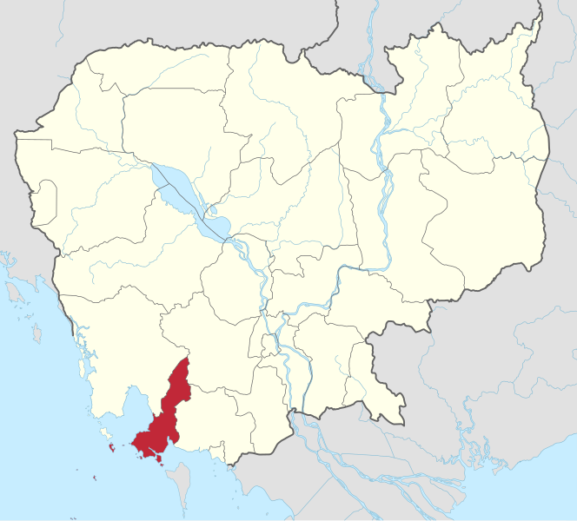
Kep Province is a small coastal province in southwestern Cambodia, situated on the Gulf of Thailand, close to the border with Vietnam and next to Kampot Province. It is one of Cambodia’s smallest provinces and is particularly famous for its quiet beaches, tropical islands, seafood, crab with Kampot pepper, national park, and historic villas.
Kep has a character quite different from Sihanoukville. While Sihanoukville has developed into a major port and urban tourism center, Kep retains a much quieter atmosphere and is strongly associated with Cambodia’s French colonial past and the country’s 1950s–1960s cultural and architectural period. The Ministry of Tourism describes Kep as a relaxing southwestern seaside destination particularly known for seafood, crabs, islands, beaches and natural scenery.
2. The Early History of Kep
Before becoming a famous seaside resort, the Kep area was primarily a coastal landscape associated with local communities, fishing, agriculture and traditional Khmer life.
The region’s location beside the Gulf of Thailand was important because it provided access to the sea and to maritime routes connecting Cambodia with neighboring areas.
Unlike Angkor or Phnom Penh, Kep does not have a long history as a major political capital. Its historical importance comes primarily from its development as a modern coastal resort during the twentieth century.
There is also a traditional explanation for the name “Kep.” One local legend connects the name to “Kep Seh,” meaning a saddle, referring to a story about a king, a stolen white horse and a saddle that was left behind while fleeing his pursuers. This is a traditional legend rather than a documented historical explanation.
3. French Colonial Period: The Foundation of Modern Kep
One of the most important dates in Kep’s history is 1908.
During the French colonial period, the French established Kep as a seaside resort, then known as Kep-sur-Mer. Its coastal location, pleasant scenery and relatively peaceful environment made it attractive as a retreat from the heat and busyness of inland Cambodia.
Tourism Cambodia dates the establishment of modern Kep to 1908 and describes it as a French colonial seaside resort.
During the following decades, Kep developed:
- Roads and public infrastructure
- Seaside villas
- Hotels and resorts
- Restaurants
- Coastal promenades
- Government and private residences
It became particularly attractive to French colonial officials and wealthy Cambodian residents.
By the 1920s and 1930s, Kep had established itself as one of Cambodia’s most prestigious coastal retreats. The town’s architecture and landscape began to reflect its role as an exclusive resort.
4. Kep After Cambodian Independence
Cambodia gained independence from France in 1953, but Kep did not lose its importance as a seaside resort.
Instead, the city entered another important period of development.
During the 1950s and especially the 1960s, Kep became a favored destination for Cambodia’s political, economic and cultural elite. The resort was associated with the government and royal circles under Prince Norodom Sihanouk.
This was part of a broader period of modernization in Cambodia.
Kep’s development during this period was particularly important because the architecture began to change from predominantly colonial styles toward a distinctive Cambodian modernist style known as New Khmer Architecture.
5. New Khmer Architecture and Kep’s Famous Villas
One of the most fascinating aspects of Kep is its collection of modernist villas.
During the 1950s and 1960s, Cambodian architects developed a distinctive architectural language that combined:
- Modernist design
- Traditional Khmer architectural ideas
- Tropical climate considerations
- Natural ventilation
- Concrete and geometric forms
- Large windows and open spaces
- Integration with gardens and hillsides
Architects associated with Cambodia’s New Khmer Architecture movement included Vann Molyvann and Lu Ban Hap. Kep became an important setting for this architectural movement.
Many villas were built on hillsides overlooking the sea.
Today, some have been renovated, while others remain abandoned or partly ruined. These buildings are not simply old houses; they are physical reminders of an important period in Cambodia’s cultural history.
They tell the story of Cambodia’s transition from French colonial rule to an independent modern state.
6. The Royal Connection
Kep also had a strong connection with the Cambodian royal family.
Prince Norodom Sihanouk developed a royal residence in Kep during the 1960s, overlooking the sea. The location provided a peaceful retreat and spectacular views of the Gulf of Thailand.
The royal presence helped reinforce Kep’s reputation as an exclusive seaside destination.
During this period, Kep represented a very different Cambodia from the rural landscape that surrounded it. It became associated with:
- The royal family
- Government officials
- Artists and intellectuals
- Wealthy Cambodian families
- Modern architecture
- Fine dining
- Seaside recreation
Kep therefore became one of the symbols of Cambodia’s cultural and architectural “golden age” of the 1950s and 1960s.
7. The Civil War and Khmer Rouge Period
Kep’s prosperity did not last.
Cambodia entered a period of political instability and civil war during the late 1960s and early 1970s. The situation became increasingly dangerous, and tourism declined.
The situation became even more severe after the Khmer Rouge took power in 1975.
Like many parts of Cambodia, Kep experienced enormous disruption. Tourism stopped, many residents were displaced or killed, and the town’s villas and infrastructure were abandoned or damaged.
The once-fashionable seaside resort effectively became a ghost town.
The remains of abandoned villas are therefore an important part of Kep’s historical landscape. They provide a visible reminder of the dramatic break between Cambodia’s prosperous 1960s and the destruction and instability that followed.
Tourism Cambodia notes that many of Kep’s old villas were abandoned and that the town suffered heavily during the Khmer Rouge era and subsequent civil conflict.
8. Kep’s Recovery
After the end of the Khmer Rouge period, Cambodia gradually began rebuilding.
Kep recovered slowly. For many years it remained a quiet and relatively undeveloped coastal town.
However, its natural environment and historical character eventually attracted renewed interest.
Tourism began returning, and new:
- Guesthouses
- Restaurants
- Resorts
- Cafés
- Boutique hotels
- Ecotourism activities
were developed.
Kep was formally established as a province in its own right in 2008, having previously had a different administrative status.
Today, the province continues to develop as a destination focused on coastal tourism, nature, food, heritage and a slower pace of travel.
9. Kep Beach
Kep Beach is the main beach in the town.
It is relatively small compared with the large beaches of Sihanoukville, but its setting is attractive because it is surrounded by:
- The Gulf of Thailand
- Hills
- Islands
- Restaurants
- Seafood vendors
- The coastal road
Kep Beach has a more intimate atmosphere than the large resort beaches of Sihanoukville.
The beach is particularly pleasant around sunset, when visitors can look across the Gulf toward the islands.
Tourism Cambodia describes Kep’s beach as a roughly one-kilometre crescent of sand along the peninsula.
10. Kep Crab Market
Perhaps the most famous attraction in Kep is the Kep Crab Market, locally known as Psar Kdam.
This is not simply a market; it is one of the defining cultural experiences of the province.
Local fishermen bring fresh crabs from the sea, and visitors can see seafood being prepared and cooked.
The most famous dish is:
Crab with Kampot pepper
Fresh crab is stir-fried or prepared with locally grown Kampot pepper, another famous product of the region.
The combination of fresh seafood and aromatic pepper has become one of the signature culinary experiences of Cambodia’s southern coast.
The Ministry of Tourism specifically identifies Kep as being particularly famous for its crabs and seafood.
The crab market is also interesting because it connects tourism directly with local livelihoods and fishing traditions.
11. Kep National Park
Kep National Park is one of the province’s most important natural attractions.
The park occupies the hills immediately behind the town and contains tropical forest, wildlife and walking trails.
One of the most popular ways to experience it is to follow the trail around the hills.
Visitors can enjoy:
- Tropical forest
- Wildlife
- Birds
- Mountain scenery
- Views over the Gulf of Thailand
- Views of the surrounding islands
- Sunrise and sunset photography
- Hiking and walking
A major attraction of the park is that it is very close to the town. Visitors can move from the beach and seafood market to a forest environment within a short distance.
Tourism Cambodia’s current destination information describes the park as a key attraction, with an approximately eight-kilometre loop offering forest and sea views.
12. Koh Tonsay — Rabbit Island
Koh Tonsay, commonly called Rabbit Island, is located offshore from Kep.
It is one of the most popular excursions from the province.
The island is known for:
- Sandy beaches
- Clear seawater
- Tropical vegetation
- Swimming
- Relaxation
- Seafood
- Simple beach accommodation
- Boat trips
The journey from Kep to Koh Tonsay is relatively short, making it possible to visit the island as a half-day or full-day excursion.
The Ministry of Tourism describes Koh Tonsay as a peaceful island destination only a short boat ride from the coast.
Koh Tonsay is particularly attractive to travelers who want a simple, quiet island experience rather than a heavily developed resort environment.
13. Kep’s Old Villas and Modernist Architecture
For people interested in history and architecture, the abandoned villas may be even more interesting than the beach.
Scattered around Kep are remnants of houses constructed during the French colonial period and, especially, the 1950s–1960s.
The later modernist villas are significant examples of Cambodia’s New Khmer Architecture.
Their characteristics often include:
- Unusual geometric shapes
- Large open terraces
- Concrete structures
- Elevated floors
- Large windows
- Integration with the surrounding landscape
- Views toward the sea
The ruined buildings have become part of Kep’s identity.
Rather than being simply abandoned houses, they provide evidence of the dramatic historical changes Cambodia experienced during the twentieth century.
14. Royal Residence and Historical Sites
Kep contains several sites associated with the Cambodian royal family and the country’s modern history.
The former royal residence associated with King Norodom Sihanouk is located in the coastal area and is connected with the development of Kep during the 1960s.
There are also older royal and colonial-era structures in the surrounding area.
These sites help explain why Kep became an important resort for Cambodia’s elite during the country’s post-independence period.
15. Wat Samot Reangsey
Wat Samot Reangsey is one of the Buddhist religious sites associated with Kep.
The temple provides a contrast to the province’s beaches and modernist architecture.
Visitors interested in Cambodian culture can observe:
- Buddhist architecture
- Religious statues
- Local religious practices
- Temple decoration
- Traditional Cambodian beliefs
Tourism Cambodia lists Wat Samot Reangsey among Kep’s attractions.
16. Salt Production and Agriculture
Kep and neighboring Kampot are also associated with salt production and agriculture.
The coastal environment provides suitable conditions for traditional salt farming.
Salt fields are particularly interesting because they demonstrate how local communities have adapted to the coastal environment.
The region is also closely connected with Kampot pepper, one of Cambodia’s best-known agricultural products.
This creates an interesting connection between:
Sea → Salt → Crab → Pepper → Cambodian cuisine
These products are an important part of the identity of Cambodia’s southern coast.
17. Phnom Sar Sear
Phnom Sar Sear is a natural and cultural attraction in the wider Kep area.
The site is associated with limestone formations, caves and religious elements.
It provides another opportunity to explore the landscape beyond the beaches and is particularly interesting for visitors who enjoy combining nature with local culture.
The Ministry of Tourism lists Phnom Sar Sear among the province’s attractions.
18. The Natural Landscape of Kep
One of the defining characteristics of Kep is the way several landscapes come together in a relatively small area.
Visitors can experience:
- 🌊 Gulf of Thailand coastline
- 🏝️ Tropical islands
- 🌳 Forested hills
- 🦀 Fishing communities
- 🧂 Salt fields
- 🌶️ Pepper-growing areas
- 🏛️ Colonial and modernist architecture
- 🛕 Buddhist temples
This combination gives Kep a distinct identity among Cambodia’s tourist destinations.
19. Why Kep Is Historically Important
Kep is important because its history reflects several major stages of Cambodia’s modern history.
| Period | Historical significance |
|---|---|
| Before 1908 | Coastal communities, fishing and traditional Khmer life |
| 1908 | Kep established as a French colonial seaside resort |
| 1920s–1930s | Development as an elite coastal retreat |
| 1953 | Cambodia gains independence |
| 1950s–1960s | Kep becomes a major resort for Cambodia’s elite |
| 1950s–1970 | Development of New Khmer Architecture and modernist villas |
| 1970s | Civil war and political instability disrupt tourism |
| 1975–1979 | Khmer Rouge period causes severe disruption |
| 1980s–1990s | Gradual recovery and reconstruction |
| 2000s | Tourism begins expanding again |
| 2008 | Kep becomes a province in its own right |
| Today | Coastal tourism, heritage, nature and culinary tourism |
20. What Makes Kep Different from Sihanoukville?
Kep and Sihanoukville are both coastal destinations, but their identities are quite different.
| Kep | Sihanoukville |
|---|---|
| Small and relatively quiet | Larger and more urban |
| Famous for crab and seafood | Major port and tourism center |
| Strong colonial/1960s heritage | Strong modern commercial development |
| Kep National Park | Major urban beaches and port |
| Koh Tonsay | Gateway to Koh Rong and Koh Rong Sanloem |
| Abandoned modernist villas | Large hotels and urban development |
| Relaxed atmosphere | More developed and commercially active |
| Heritage and nature tourism | Beach, island and urban tourism |
Kep is therefore particularly suitable for travelers who want history, food, nature and a peaceful coastal environment.
21. Suggested One-Day Kep Tour
If you only have one day, a practical itinerary could be:
Morning
Visit Kep National Park early in the morning while the weather is cooler. Walk through the forest and enjoy the views over the Gulf of Thailand.
Late morning
Explore some of the old modernist villas and learn about Kep’s 1950s–1960s history.
Lunch
Visit the Kep Crab Market and try fresh crab with Kampot pepper.
Afternoon
Take a boat to Koh Tonsay (Rabbit Island) and spend several hours swimming and relaxing.
Late afternoon
Return to Kep and visit Kep Beach.
Evening
Enjoy seafood while watching the sunset over the Gulf of Thailand.
22. Conclusion
Kep Province is one of Cambodia’s most distinctive destinations because its attractions are closely connected to its history.
It began as a French colonial seaside resort in 1908, became an exclusive retreat for Cambodia’s elite during the 1950s and 1960s, and developed an important collection of modernist architecture during Cambodia’s post-independence period. The civil war and Khmer Rouge era brought severe disruption, leaving behind abandoned villas and other reminders of the country’s difficult twentieth-century history.
Today, Kep is experiencing a gradual revival. Its appeal comes from the combination of Kep National Park, Kep Beach, Koh Tonsay, historic villas, Buddhist sites, fishing culture, salt production and especially its famous fresh crab with Kampot pepper.
In short, Kep is not simply a beach destination. It is a place where visitors can see Cambodia’s colonial history, post-independence modernization, architectural heritage, natural environment and coastal culture within a relatively small area. That combination makes Kep particularly valuable for travelers who want to understand both the beauty and the modern history of Cambodia.