Kampot
Kampot Province: History, Culture, and Major Attractions
1. Introduction
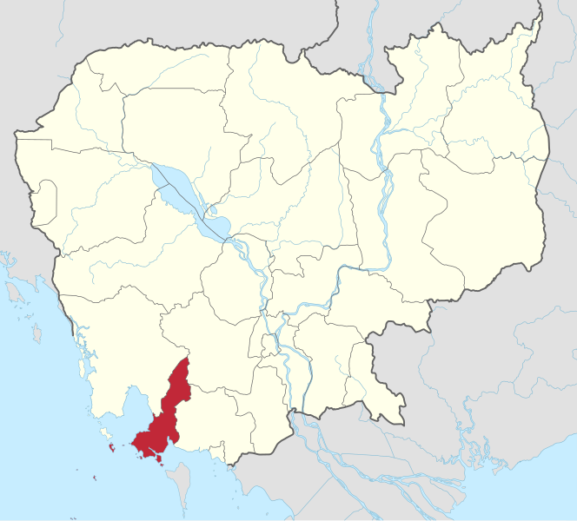
Kampot Province is located in southwestern Cambodia, along the Gulf of Thailand and near the foothills of the Elephant Mountains. The provincial capital, Kampot, sits on the Teuk Chhou River, several kilometres inland from the sea.
Kampot is one of Cambodia’s most distinctive destinations because it combines French colonial heritage, rivers and countryside, mountains, caves, waterfalls, pepper plantations, salt fields, coastal areas, and important historical sites. The province is also internationally associated with Kampot Pepper, while the town itself is known for its surviving colonial-era architecture and relaxed riverside atmosphere.
Historically, Kampot has been important not only as a tourist destination but also as a river port, agricultural center, trading area and gateway between Cambodia’s interior and the Gulf of Thailand.
2. Geography and Natural Setting
Kampot’s geographical position has strongly influenced its history and economy.
The province is bordered by Kampong Speu to the north, Takeo to the east, Sihanoukville and Koh Kong to the west, and the Gulf of Thailand to the south. Its landscape includes lowland agricultural areas in the east and the forested mountains of the Elephant Mountain range in the west.
The combination of:
- Rivers
- Mountains
- Coastal areas
- Fertile agricultural land
- Tropical forests
- Limestone formations
- Salt-producing areas
has made Kampot particularly suitable for agriculture, fishing, trade and tourism.
The town of Kampot itself is located on the Teuk Chhou River, approximately 5 km inland from the sea.
3. Early History of Kampot
Kampot’s history is considerably older than the colonial buildings visible in the provincial capital today.
The wider Kampot region contains archaeological and religious remains dating back to periods before the Angkorian Empire. Among the most interesting examples are the cave temples and pre-Angkorian structures around Kampot, which demonstrate that the area was connected to early Cambodian civilization.
One particularly important site is Phnom K’Chnor, where a small brick structure dating to approximately the 4th–5th centuries AD is associated with the ancient state of Funan. It is located inside a limestone cave, surrounded by stalactites and stalagmites.
These remains demonstrate that Kampot was not simply created during the French colonial period. The region has a much deeper history of settlement, religion and trade.
4. Kampot as a River and Trading Center
The location of Kampot on the Teuk Chhou River was particularly important.
The river provided a natural transportation route between the agricultural areas inland and the Gulf of Thailand. Goods from the countryside could be transported toward the coast, while imported goods could travel inland.
Agriculture and fishing became important components of the local economy.
The surrounding countryside produced crops such as:
- Rice
- Durian
- Coconut
- Mango
- Melon
- Pepper
- Other tropical fruits
Tourism Cambodia notes that fishing and farming remain important activities in the area and that Kampot is particularly well known for its fruit, salt and pepper.
5. French Colonial Period
The French colonial period had an enormous influence on modern Kampot.
Cambodia became part of the French protectorate system in the nineteenth century, and French administrative, commercial and architectural influences gradually transformed Kampot.
Because of its river and coastal position, Kampot developed as an important regional commercial center.
The town’s importance can still be seen in its historic buildings.
Kampot’s colonial architecture
Walking through the old town, visitors can see:
- Narrow streets
- Old shophouses
- Colonial administrative buildings
- Traditional wooden houses
- French-influenced facades
- Old market buildings
- Historic riverside structures
Some buildings feature colorful shutters, balconies and decorative details characteristic of French colonial architecture.
This architectural heritage is one of the reasons Kampot has become an important cultural tourism destination. Tourism Cambodia specifically identifies the town’s surviving French colonial architecture as one of its attractions.
6. Kampot During the 20th Century
During the first half of the twentieth century, Kampot remained an important provincial center.
Its economy was connected to:
- Agriculture
- Pepper cultivation
- Salt production
- Fishing
- River trade
- Coastal trade
The development of nearby Bokor Mountain also gave Kampot another important role.
The French developed Bokor as a mountain resort because of its cooler climate and elevation. This created a relationship between Kampot town and Bokor that remains important for tourism today.
7. Bokor Mountain and the French Hill Station
Perhaps the most famous historical attraction associated with Kampot is Bokor Hill Station, located on Bokor Mountain in what is now Preah Monivong Bokor National Park.
Bokor was developed during the French colonial era as a mountain retreat.
Tourism Cambodia records the development of the hill station in the early twentieth century, with major construction taking place in the 1920s. The high elevation provided a cooler environment than the tropical lowlands.
The hill station included:
- Hotels
- A casino
- A Catholic church
- Administrative buildings
- Residences
- Roads
- Other facilities
The famous Bokor Palace Hotel and Casino became the centerpiece of the settlement.
The French used the area as a retreat from the heat of the lowlands, while it later became associated with Cambodia’s royal and political elite.
8. Bokor During the Sihanouk Era
Bokor remained significant after Cambodia gained independence in 1953.
During the 1960s, Prince Norodom Sihanouk’s government developed additional facilities in the area. Bokor became associated with Cambodia’s post-independence elite and the country’s modernization period.
Le Bokor Palace was reopened during this period and was used by senior officials and wealthy visitors. Tourism Cambodia notes its connection with King Norodom Sihanouk and its role as a vacation retreat.
This makes Bokor particularly interesting because its history reflects both French colonial Cambodia and independent Cambodia.
9. War and the Khmer Rouge Period
Like the rest of Cambodia, Kampot suffered greatly during the country’s wars and political conflicts from the late 1960s through the 1970s.
The development of the province was interrupted, tourism declined, and many people were displaced.
During the Khmer Rouge period from 1975 to 1979, Kampot and the surrounding region experienced severe disruption and suffering.
Bokor’s strategic mountain position also made it significant during the conflicts.
The abandoned buildings on Bokor therefore have a complicated history. They are not simply picturesque ruins; they are physical reminders of Cambodia’s turbulent twentieth century.
Tourism Cambodia describes Bokor as having been abandoned for decades following the country’s wars, leaving old French buildings surrounded by jungle and mist.
10. Kampot’s Recovery
Following the end of the Khmer Rouge era, Cambodia gradually began rebuilding.
Kampot recovered slowly but eventually became increasingly popular with travelers seeking an alternative to the country’s larger cities and beach resorts.
Its advantages included:
- Historic architecture
- River scenery
- Rural countryside
- Nearby mountains
- Pepper plantations
- Caves
- Waterfalls
- Access to Kep
- Access to the coast
- Bokor National Park
Today, Kampot has become an important destination for cultural tourism, nature tourism, food tourism and countryside experiences.
11. Kampot Town and Colonial Quarter
The old town is one of the most attractive parts of Kampot.
The best way to appreciate it is often simply to walk or cycle through the streets.
Visitors can observe historic buildings with:
- Blue or green shutters
- Balconies
- Decorative facades
- Chinese-Cambodian architectural influences
- French colonial features
The buildings reflect the town’s history as a trading center where Cambodian, Chinese, Vietnamese and French influences came together.
The riverside is also an important part of the town’s character. Restaurants, cafés and guesthouses line sections of the river, making it a popular place to relax and watch boats and the surrounding countryside.
12. Kampot River and Sunset Cruises
The Teuk Chhou River is one of the defining geographical features of Kampot.
River cruises have become a popular way to experience the area.
A typical river experience can include:
- Views of the countryside
- Fishing activity
- Mangroves and vegetation
- Traditional riverside houses
- Mountain scenery
- Sunset views
One of the most memorable experiences is watching the sunset over the water with the silhouette of the Elephant Mountains in the background.
Tourism Cambodia identifies river cruises, fishing trips and countryside exploration among the activities available around Kampot.
13. Kampot Pepper
No description of Kampot Province would be complete without Kampot Pepper.
Kampot Pepper is one of Cambodia’s most famous agricultural products and has an internationally recognized geographical identity.
The region’s soil, climate and traditional farming practices contribute to the distinctive characteristics of the pepper.
Different varieties include:
- Black pepper
- Red pepper
- White pepper
- Green pepper
Visitors can travel into the countryside to see pepper plantations and learn how pepper is cultivated, harvested and processed.
Tourism Cambodia notes that the combination of Kampot’s climate, soil and generations of farming experience has contributed to the pepper’s reputation.
For food lovers, visiting a pepper plantation is one of the most meaningful experiences in the province because it connects agriculture, history, local livelihoods and Cambodian cuisine.
14. Salt Fields
Another important agricultural attraction is Kampot’s salt production.
The coastal areas around Kampot provide suitable conditions for salt farming.
During the dry season, seawater is directed into shallow fields where evaporation leaves salt crystals behind.
Salt production is important not only economically but also culturally because it represents a traditional relationship between local communities and the coastal environment.
Tourism Cambodia identifies salt production as one of Kampot’s important local industries and attractions.
15. Prek Ampil
Prek Ampil is a coastal attraction in Kampot Province.
It is characterized by:
- White sand
- Mangrove trees
- Coconut palms
- Coastal scenery
- Fresh seafood
The waters in the area also contain coral environments, making it potentially interesting for snorkeling and other marine activities when conditions permit.
Prek Ampil provides a different experience from Kampot town and Bokor: it allows visitors to explore the province’s coastal landscape.
16. Bokor National Park
Preah Monivong Bokor National Park, commonly called Bokor National Park, is one of Kampot’s most important natural attractions.
The park is part of the Elephant Mountains and contains extensive forest and mountainous terrain.
Visitors can experience:
- Tropical forest
- Mountain scenery
- Wildlife
- Waterfalls
- Historic buildings
- Panoramic views
- Cooler mountain temperatures
The summit area provides spectacular views toward the Gulf of Thailand and surrounding countryside.
The mountain’s elevation and proximity to the coast create distinctive weather conditions, and mist frequently surrounds the summit.
17. Bokor Hill Station
Within the national park, the historic Bokor Hill Station is one of Cambodia’s most recognizable heritage sites.
Important buildings and landmarks include:
Bokor Palace
The former hotel and casino is perhaps the most famous structure.
Its dramatic location on the mountain and its history have made it an iconic Cambodian heritage site.
Old Catholic Church
The old church is another surviving colonial structure.
Its location and architecture make it one of the most photographed historic buildings on Bokor.
Former royal residence
There are also buildings associated with Cambodia’s royal period.
Other colonial structures
The old settlement included various administrative and residential structures.
Tourism Cambodia identifies the hill station as a collection of French colonial buildings, including the hotel and casino, church and royal residence.
18. Popokvil Waterfall
Popokvil Waterfall is another well-known attraction on Bokor Mountain.
The Khmer name is often translated as “swirling clouds.”
The waterfall is surrounded by forest and is especially impressive during the rainy season, when water flow is stronger.
It is an excellent place to combine:
- Nature
- Hiking
- Photography
- Forest scenery
- Mountain exploration
Tourism Cambodia describes Popokvil as being near the historic hill station and notes its distinctive misty atmosphere.
19. Phnom Chhnork
Phnom Chhnork is an important archaeological and natural attraction.
It is a limestone cave containing an ancient brick structure.
The site is particularly interesting because visitors can see an ancient religious structure within a natural cave environment.
The brick structure is associated with the Funan period and dates to approximately the 4th–5th centuries AD.
This makes Phnom Chhnork particularly valuable because it demonstrates that Kampot’s historical importance extends far beyond the French colonial period.
20. Phnom Sia and the Caves
The Kampot region contains numerous limestone formations and caves.
Phnom Sia is one of the better-known examples.
The caves contain natural rock formations and religious associations. Some formations have been interpreted locally as resembling animals or other objects and are connected with shrines.
The cave systems demonstrate the geological diversity of the region and provide an interesting combination of nature, geology and Cambodian religious traditions.
21. Kampong Trach
Kampong Trach, in the wider Kampot area, is known for its limestone mountains, caves and natural wells.
The landscape contains unusual rock formations and caves that have been incorporated into local religious traditions.
There are also Buddhist temples and religious sites associated with Cambodian, Chinese and Vietnamese communities.
This makes Kampong Trach interesting from both a natural and cultural perspective.
22. Teuk Chhou Rapids
Teuk Chhou is a natural recreation area north of Kampot.
The area is associated with the Teuk Chhou River and the foothills of the Elephant Mountains.
Visitors can enjoy:
Its location and architecture make it one of the most photographed historic buildings on Bokor.
Former royal residence
Other colonial structures
Tourism Cambodia identifies the hill station as a collection of French colonial buildings, including the hotel and casino, church and royal residence.
18. Popokvil Waterfall
It is an excellent place to combine:
- Nature
- Hiking
- Photography
- Forest scenery
- Mountain exploration
19. Phnom Chhnork
- Cool flowing water
- Rocks and rapids
- Tropical vegetation
- Fruit plantations
- Picnics
- Local food
- Countryside scenery
The area has traditionally been popular with Cambodian families seeking a place to relax outside the town. Tourism Cambodia describes Teuk Chhou as a natural resort where cool, clear water flows over large rocks.
23. Kampot’s Fruits and Local Cuisine
Kampot is also known for its agricultural products.
The province produces:
- Durian
- Coconut
- Mango
- Mangosteen
- Pineapple
- Rambutan
- Melons
- Pepper
- Salt
Durian is particularly associated with Kampot and neighboring areas.
Local cuisine naturally makes extensive use of the province’s agricultural and marine products.
A typical food experience might combine:
Fresh seafood + Kampot Pepper + local herbs + tropical fruit.
This is one reason Kampot is increasingly attractive to travelers interested in food and culinary culture.
24. Kampot’s Historical Importance
Kampot’s history can be understood through several major periods:
| Period | Importance |
|---|---|
| 4th–5th centuries | Archaeological evidence associated with Funan |
| Angkor and later periods | Continued settlement and religious activity |
| 19th century | Increasing French colonial influence |
| French colonial era | Kampot develops as a regional commercial and administrative center |
| Early 20th century | Bokor developed as a French mountain resort |
| 1920s | Major Bokor Hill Station buildings constructed |
| 1953 | Cambodia gains independence |
| 1950s–1960s | Kampot and Bokor continue developing |
| 1970s | War and political instability disrupt the region |
| 1975–1979 | Khmer Rouge period causes severe disruption |
| 1980s–1990s | Gradual reconstruction |
| 2000s–present | Growth of cultural, nature and food tourism |
25. What Makes Kampot Special?
Kampot is particularly interesting because its attractions are connected rather than isolated.
For example:
The river explains the town’s historical development as a trading center.
The colonial buildings reflect the French period.
The pepper plantations represent the agricultural economy.
The salt fields demonstrate the importance of the coast.
Bokor Mountain reflects both colonial and post-independence history.
The caves reveal much older Cambodian civilization.
The countryside and river provide opportunities for modern ecotourism.
This gives Kampot a broader cultural identity than a destination that depends solely on beaches.
26. Kampot Compared with Kep and Sihanoukville
It is useful to understand Kampot alongside Cambodia’s other southern destinations.
| Kampot | Kep | Sihanoukville |
|---|---|---|
| River and countryside destination | Small coastal resort | Major port and coastal city |
| French colonial architecture | French/modernist villa heritage | Modern urban development |
| Kampot Pepper | Kep crab | Beaches and islands |
| Bokor Mountain | Kep National Park | Koh Rong/Koh Rong Sanloem gateway |
| Caves and waterfalls | Koh Tonsay | Large beaches |
| Salt fields | Seafood | International port |
| River cruises | Quiet coastal atmosphere | More urban and commercial |
| Food and agricultural tourism | Heritage and relaxation | Beach and island tourism |
Together, the three destinations offer a particularly rich journey through southwestern Cambodia.
27. Suggested 2-Day Kampot Itinerary
Day 1 — Kampot town and countryside
Morning
Begin by exploring the old town and its French colonial architecture.
Walk or cycle through the historic streets and visit the central market.
Late morning
Travel into the countryside to visit a Kampot Pepper plantation and learn about the production of black, red and white pepper.
Afternoon
Visit the salt fields and continue toward the countryside around Teuk Chhou.
Evening
Return to Kampot and take a sunset river cruise on the Teuk Chhou River.
Finish the day with dinner featuring local seafood and Kampot Pepper.
Day 2 — Bokor Mountain
Morning
Travel to Preah Monivong Bokor National Park.
Visit the historic Bokor Hill Station, including the old Palace/Casino and Catholic church.
Midday
Explore the mountain scenery and viewpoints.
Afternoon
Visit Popokvil Waterfall and enjoy the surrounding forest.
Evening
Return to Kampot.
If time allows, enjoy another riverside dinner or explore the old town at night.
28. Conclusion
Kampot Province is one of Cambodia’s most historically and geographically diverse destinations.
Its story begins with ancient settlements and religious sites, continues through its development as a river and trading center, and then enters a major new chapter during the French colonial period, when Kampot’s town architecture and Bokor Mountain were transformed.
The province subsequently experienced Cambodia’s independence, the modernization of the 1950s and 1960s, the devastation of war and the Khmer Rouge period, and finally a gradual tourism revival.
Today, Kampot’s attractions include the historic town, French colonial architecture, Bokor National Park, Bokor Hill Station, Popokvil Waterfall, Teuk Chhou, Phnom Chhnork, Kampong Trach, salt fields, pepper plantations, Prek Ampil and the Teuk Chhou River.
Perhaps the best way to describe Kampot is as a province where history, nature, agriculture and culture meet. A visitor can walk through a colonial-era town in the morning, visit a pepper plantation at midday, explore a centuries-old cave in the afternoon, and watch the sunset over the river in the evening.
That combination—rather than any single monument—is what makes Kampot one of Cambodia’s most distinctive destinations.