Phnom Penh
Phnom Penh: The Capital City of Cambodia – History and Attractions
Introduction to Phnom Penh
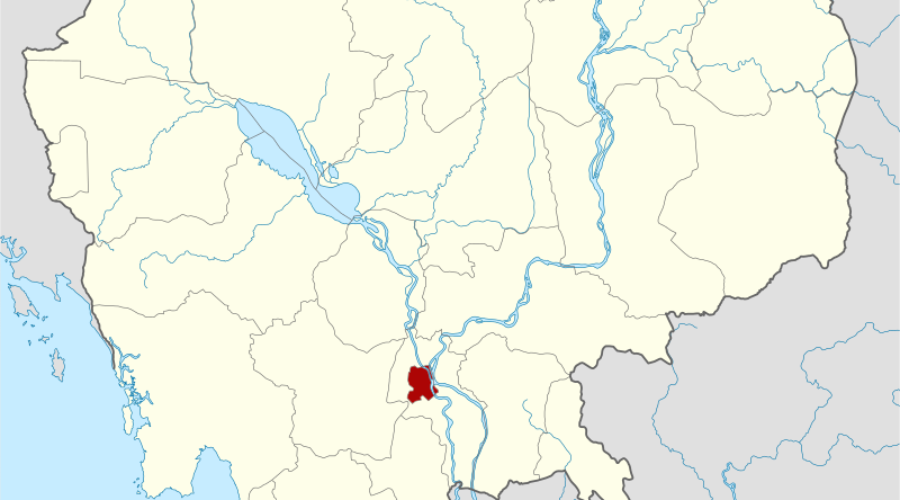
Phnom Penh is the capital, largest city, and political, economic, cultural, and administrative center of the Kingdom of Cambodia. Located in the south-central part of the country, the city stands at the historic meeting point of the Mekong River, Tonlé Sap River, and Bassac River. This strategic location has played an important role in Phnom Penh’s development as a center of transportation, trade, government, and culture.
Phnom Penh is a fascinating destination because it brings together many different periods of Cambodian history. Visitors can discover ancient Khmer traditions, royal heritage, Buddhist temples, French colonial architecture, modern urban development, traditional markets, museums, and important memorial sites connected to Cambodia’s twentieth-century history.
The city is often considered the heart of modern Cambodia. While Siem Reap is internationally famous for the ancient temples of Angkor, Phnom Penh provides visitors with a deeper understanding of Cambodia’s royal history, modern development, culture, daily life, and national identity.
1. The Origin of Phnom Penh
The Legend of Daun Penh
The history of Phnom Penh is closely connected to the famous legend of Daun Penh, also known as Grandma Penh.
According to traditional accounts, Daun Penh was a wealthy woman who discovered a large tree floating in the river. Inside the tree, she found sacred Buddha images. She decided to create an artificial hill and build a shrine to protect and worship the sacred statues.
This hill later became known as Wat Phnom, meaning the temple on the hill.
The name Phnom Penh is traditionally understood as meaning “Penh’s Hill”, referring to the hill associated with Daun Penh. Wat Phnom remains one of the most important historical and religious landmarks in the capital.
Today, Wat Phnom is considered the symbolic birthplace of Phnom Penh and continues to be an important place of worship for Cambodian people.
2. Phnom Penh Becomes an Important Capital
During the history of Cambodia, the royal capital moved between different locations.
After the great period of the Angkor Empire, Cambodia experienced political changes and challenges. The center of royal power gradually moved away from Angkor toward other parts of the country.
Phnom Penh became an important royal center during the 15th century. Its location near major rivers made it suitable for transportation, communication, trade, and administration.
The rivers provided important connections between different parts of Cambodia and neighboring regions.
However, Phnom Penh was not continuously the permanent capital throughout Cambodian history. The royal capital moved several times before Phnom Penh eventually became the country’s permanent capital during the modern period.
3. Phnom Penh Becomes the Permanent Capital
Phnom Penh became the permanent seat of government and capital of Cambodia in 1866, during the reign of King Norodom.
The development of the modern capital accelerated during this period, including the establishment of the Royal Palace and the growth of Phnom Penh as an important administrative and commercial center.
The city’s riverside location helped Phnom Penh become an important center for trade and transportation.
Over time, the city developed roads, government buildings, markets, schools, commercial areas, and public institutions.
4. Phnom Penh During the French Colonial Period
Cambodia became part of the French protectorate system in the nineteenth century, and Phnom Penh experienced significant urban development during the colonial period.
The city gradually developed into a modern urban center.
French influence can still be seen today in many aspects of Phnom Penh’s architecture and city planning.
During this period, important developments included:
- Roads and boulevards
- Government buildings
- Schools and public institutions
- Commercial areas
- Markets
- Colonial-style buildings
- Public infrastructure
- Riverfront development
The combination of traditional Khmer architecture and European architectural influence created a unique character for Phnom Penh.
5. Phnom Penh – The “Pearl of Asia”
During the first half of the twentieth century, Phnom Penh experienced a period of modernization and growth.
The city became known for its attractive boulevards, elegant architecture, gardens, markets, and riverside areas.
Phnom Penh developed a reputation as one of the beautiful and important cities of Southeast Asia and was sometimes described as the “Pearl of Asia.”
Modern infrastructure, transportation, architecture, and public spaces contributed to the city’s development.
The capital became increasingly important as Cambodia’s center for:
- Government
- Education
- Trade
- Culture
- International relations
- Transportation
- Business
6. Cambodia’s Independence and Modern Development
Cambodia gained independence from France in 1953.
The years following independence were an important period of national development.
Phnom Penh continued to grow as the capital and became the center of Cambodia’s political, cultural, and economic life.
New buildings, schools, universities, sports facilities, cultural institutions, and public infrastructure were developed.
The city became an important symbol of Cambodia’s independence and national development.
The Independence Monument was later constructed as a powerful symbol of Cambodia’s freedom and independence.
7. Phnom Penh During the Khmer Rouge Period
One of the most tragic chapters in the history of Phnom Penh occurred during the Khmer Rouge period.
In April 1975, Phnom Penh experienced dramatic changes when the Khmer Rouge took control of the city. The population was forcibly evacuated, and the city became the center of a devastating period in Cambodian history.
Many buildings were abandoned, and the country’s social, educational, religious, and economic systems suffered enormously.
Today, important memorial sites in Phnom Penh help preserve the memory of this period and educate future generations about the importance of peace, human rights, remembrance, and reconciliation.
The Tuol Sleng Genocide Museum, formerly known as Security Prison 21 or S-21, is one of the most important memorial sites in the city. It preserves evidence of the Khmer Rouge period and serves as a place of remembrance and education.
The Cambodian Memorial Sites, including Tuol Sleng and Choeung Ek, were inscribed on the UNESCO World Heritage List in 2025 as places of remembrance, peace, and reflection.
8. Phnom Penh After 1979
Following the end of the Khmer Rouge period, Phnom Penh gradually began rebuilding.
The city faced enormous challenges after years of conflict and destruction.
Over time, Cambodia experienced reconstruction and development.
Phnom Penh gradually regained its role as the country’s main center of government, business, education, and culture.
New roads, buildings, hotels, restaurants, businesses, schools, and commercial centers were developed.
Today, Phnom Penh is a rapidly developing capital where modern buildings stand alongside ancient temples, royal monuments, traditional markets, and historic colonial architecture.
9. The Royal Palace
One of Phnom Penh’s Most Important Attractions
The Royal Palace is one of the most beautiful and important landmarks in Phnom Penh.
The palace complex is associated with Cambodia’s monarchy and contains magnificent examples of traditional Khmer architecture.
Visitors can admire the beautiful golden roofs, elegant towers, gardens, ceremonial buildings, and traditional decorative designs.
Important areas include:
- The Throne Hall
- Royal ceremonial buildings
- Beautiful gardens
- Traditional Khmer architecture
- The Silver Pagoda complex
- Important stupas and religious structures
The Throne Hall is used for important royal ceremonies and official occasions. The Royal Palace remains a major symbol of Cambodia’s monarchy and national heritage.
10. The Silver Pagoda
The Silver Pagoda, also known as Wat Preah Keo Morakot, is located within the Royal Palace complex.
It is one of Cambodia’s most important religious monuments.
The pagoda contains important Buddhist treasures and is famous for its beautiful architecture and historical significance.
Visitors can explore the surrounding buildings, religious monuments, and decorative features while learning about Cambodia’s Buddhist and royal traditions.
The Silver Pagoda is an essential attraction for travelers interested in Cambodian religion, culture, and royal history.
11. The National Museum of Cambodia
The National Museum of Cambodia is one of the most important cultural institutions in the country.
Located near the Royal Palace, the museum contains an extraordinary collection of Khmer art and historical objects.
The museum building itself is an attraction, as its architecture was inspired by traditional Khmer temple design.
The collection includes thousands of important objects, including:
- Ancient Khmer sculptures
- Hindu statues
- Buddhist sculptures
- Ceramics
- Bronze objects
- Archaeological discoveries
- Ethnographic objects
The museum’s collections cover a long period of Cambodian history, from prehistoric times through the Angkor period and later historical eras.
A visit to the National Museum is highly recommended for travelers who want to better understand Cambodian civilization before or after visiting Angkor.
12. Wat Phnom
The Birthplace of Phnom Penh
Wat Phnom is one of the most famous temples in Phnom Penh.
Located on a small hill, it is strongly connected to the traditional origin story of the city.
The temple is associated with Daun Penh and the founding legend of Phnom Penh.
Visitors can climb the hill and explore:
- The Buddhist temple
- Religious statues
- Shrines
- Gardens
- Historical monuments
- The surrounding park
Wat Phnom is both a religious site and an important symbol of the capital.
It provides visitors with an opportunity to experience a peaceful Buddhist environment in the center of the busy city.
13. Wat Ounalom
Wat Ounalom is one of Phnom Penh’s most important Buddhist monasteries.
Its history can be traced back several centuries, and it has played an important role in Cambodian Buddhism.
The monastery is located near the riverside and is an important spiritual center.
Visitors can experience:
- Buddhist religious traditions
- Pagoda architecture
- Monastic life
- Sacred religious objects
- Peaceful temple surroundings
Wat Ounalom is an excellent place for visitors interested in Cambodian Buddhism and spiritual heritage.
14. Independence Monument
The Independence Monument is one of Phnom Penh’s most recognizable modern landmarks.
It was built to commemorate Cambodia’s independence.
The monument is designed in a style inspired by traditional Khmer architecture.
Its lotus-shaped design makes it one of the most beautiful monuments in the capital.
The Independence Monument is especially attractive in the evening when it is illuminated.
It represents:
- Cambodian independence
- National pride
- Freedom
- Modern Cambodian history
15. Norodom Sihanouk Memorial
Near the Independence Monument, visitors can find the memorial dedicated to King Father Norodom Sihanouk.
The monument honors one of the most important figures in modern Cambodian history.
It is an important location for understanding Cambodia’s journey toward independence and national development.
The surrounding area is also popular for walking and enjoying Phnom Penh’s city atmosphere.
16. Tuol Sleng Genocide Museum
Understanding a Difficult Chapter of Cambodian History
The Tuol Sleng Genocide Museum is one of the most important historical sites in Phnom Penh.
Before the Khmer Rouge period, the location was a school. During the Khmer Rouge regime, it was transformed into the S-21 security prison and interrogation center.
Today, the site serves as a museum and memorial dedicated to preserving the memory of the victims and educating visitors about this tragic period in Cambodian history.
Visitors can see:
- Former prison buildings
- Historical photographs
- Documents and archives
- Former detention rooms
- Memorial displays
- Educational exhibitions
A visit to Tuol Sleng is emotionally powerful and provides an important opportunity to learn about Cambodia’s modern history.
17. Choeung Ek Genocidal Center
Located outside the central city area, Choeung Ek is another important memorial site connected to the Khmer Rouge period.
It is associated with the execution of prisoners from S-21 and today serves as a place of remembrance and reflection.
Visitors can learn about the historical events that took place during this difficult period and pay respect to the victims.
Together, Tuol Sleng and Choeung Ek provide important historical education about Cambodia’s past and the importance of peace and reconciliation. These sites are part of the UNESCO-recognized Cambodian Memorial Sites.
18. The Phnom Penh Riverfront
The Phnom Penh Riverfront, particularly the area along the rivers, is one of the most enjoyable places to experience daily life in the capital.
The riverfront offers beautiful views and a lively atmosphere.
Visitors can enjoy:
- Walking along the river
- Watching local life
- Restaurants and cafés
- Beautiful sunsets
- Riverside scenery
- Traditional and modern buildings
The rivers have always been central to Phnom Penh’s history and development.
The meeting point of the Mekong, Tonlé Sap, and Bassac waterways is one of the geographical features that makes Phnom Penh unique.
19. Mekong River Cruise
A river cruise is one of the most relaxing ways to experience Phnom Penh.
Visitors can enjoy views of:
- Phnom Penh’s skyline
- The Royal Palace area
- Riverside communities
- Local fishing activities
- Traditional boats
- Sunset over the river
Sunset cruises are particularly popular because visitors can enjoy the changing colors of the sky while observing life along the river.
A Mekong River cruise provides a completely different perspective of Cambodia’s capital.
20. Central Market
A Beautiful Art Deco Landmark
The Central Market, also known as Phsar Thmey, is one of the most famous markets in Phnom Penh.
The building is well known for its impressive Art Deco design.
The market is an important shopping and cultural destination.
Visitors can find:
- Jewelry
- Clothing
- Souvenirs
- Handicrafts
- Food
- Fresh products
- Everyday household goods
The Central Market is not only a shopping destination but also an important architectural landmark in Phnom Penh.
21. Russian Market
The Russian Market, also known as Tuol Tompoung Market, is another popular shopping destination.
The market is famous for its lively atmosphere and wide variety of products.
Visitors can explore:
- Souvenirs
- Clothing
- Handicrafts
- Local products
- Artwork
- Food stalls
It is a popular place for visitors looking for gifts and traditional Cambodian products.
22. Phnom Penh’s Food and Culinary Experience
Phnom Penh is one of the best places in Cambodia to discover the diversity of Khmer cuisine.
The capital offers everything from traditional street food to modern international restaurants.
Popular Cambodian dishes include:
- Fish Amok
- Beef Lok Lak
- Khmer Red Curry
- Bai Sach Chrouk
- Khmer noodles
- Fresh spring rolls
- Grilled fish
- Traditional soups
- Cambodian desserts
Visitors can enjoy food at:
- Local markets
- Street food areas
- Traditional Khmer restaurants
- Modern restaurants
- Riverside cafés
Phnom Penh’s food scene reflects the diversity and energy of the capital.
23. Cambodian Culture and Daily Life
One of the greatest attractions of Phnom Penh is the opportunity to experience modern Cambodian life.
The city is busy, energetic, and constantly changing.
Visitors can see:
- Buddhist monks
- Traditional markets
- Modern businesses
- Local families
- Street food vendors
- Students
- Government institutions
- Religious ceremonies
Phnom Penh offers an excellent opportunity to understand how traditional Cambodian culture continues alongside modern urban development.
24. Architecture of Phnom Penh
Phnom Penh has a fascinating mixture of architectural styles.
Visitors can discover:
Traditional Khmer Architecture
Seen in temples, pagodas, royal buildings, and monuments.
French Colonial Architecture
Seen in historic buildings, streets, and older commercial areas.
Modern Cambodian Architecture
Seen in offices, hotels, apartments, shopping centers, and new developments.
Modernist Architecture
Phnom Penh also has important examples of twentieth-century Cambodian architecture developed during the country’s modern period.
This architectural diversity makes exploring Phnom Penh an interesting experience for visitors who enjoy history and design.
25. Arts and Culture in Phnom Penh
As the capital of Cambodia, Phnom Penh is an important center for art and culture.
Visitors can discover:
- Traditional Khmer dance
- Cambodian music
- Contemporary art
- Sculpture
- Painting
- Cultural exhibitions
- Traditional handicrafts
The city offers opportunities to experience both Cambodia’s ancient artistic traditions and the creativity of modern Cambodian artists.
26. Why Phnom Penh Is a Special Destination
Phnom Penh is special because it tells the story of Cambodia from different historical periods.
Visitors can discover:
Royal Cambodia
Explore the Royal Palace and learn about the Cambodian monarchy.
Buddhist Cambodia
Visit ancient pagodas and experience Cambodia’s spiritual traditions.
Colonial Cambodia
Discover architecture and urban development from the French colonial period.
Modern Cambodia
Experience a rapidly developing capital city.
Historical Cambodia
Visit museums and memorial sites to understand important events in Cambodian history.
Everyday Cambodian Life
Explore markets, food, streets, and local communities.
27. Recommended Attractions in Phnom Penh
For visitors exploring Phnom Penh, some of the most important attractions include:
- Royal Palace
- Silver Pagoda
- National Museum of Cambodia
- Wat Phnom
- Wat Ounalom
- Independence Monument
- Norodom Sihanouk Memorial
- Tuol Sleng Genocide Museum
- Choeung Ek Genocidal Center
- Phnom Penh Riverfront
- Mekong River Cruise
- Central Market
- Russian Market
- Local food experiences
- Cambodian cultural and artistic attractions
28. Suggested Phnom Penh Experience
A complete Phnom Penh experience should combine several different aspects of the city.
Morning
Visit the Royal Palace and Silver Pagoda, followed by the National Museum.
Afternoon
Explore Wat Phnom, Independence Monument, or learn about Cambodia’s modern history at Tuol Sleng.
Evening
Enjoy a walk along the Phnom Penh Riverfront, experience local Cambodian food, and take a relaxing sunset or evening river cruise.
For a longer visit, travelers can also include Choeung Ek, local markets, art galleries, cultural experiences, and additional Buddhist temples.
A professional English-speaking tour guide can help visitors better understand Phnom Penh’s royal history, Buddhist traditions, architecture, political history, and cultural heritage.
Conclusion: Why Visit Phnom Penh?
Phnom Penh is much more than the capital city of Cambodia. It is a destination where Cambodia’s past and present come together.
Visitors can explore magnificent royal buildings, sacred Buddhist temples, world-class Khmer art collections, traditional markets, beautiful river scenery, and important historical memorial sites.
From the legendary story of Daun Penh and the sacred hill of Wat Phnom to the magnificent Royal Palace, from the treasures of the National Museum to the emotional lessons preserved at Tuol Sleng and Choeung Ek, Phnom Penh offers a deep and meaningful journey through Cambodian history.
At the same time, the city is alive with modern energy. Busy streets, restaurants, cafés, markets, businesses, and riverside life demonstrate the continuing development of Cambodia’s capital.
Phnom Penh is the political heart, cultural center, historical memory, and modern face of Cambodia. A visit to the capital provides travelers with an unforgettable opportunity to understand the Kingdom of Cambodia, its people, its history, its culture, and its hopes for the future.
Explore Angkor. Discover Cambodia. Travel Your Way.
Angkor Transport Services
Private Transportation | Airport Transfers | Private Tours | Accessible Travel | Yoga & Wellness | Sunset Boat Experiences | Cambodia Journeys
Visit Angkor Transport Services
Let us help you discover Cambodia with confidence, comfort, and genuine local hospitality.
ATS Experiences:
- Airport & Transfer
- Accessible Travel
- Half Day Tours
- Private Tours
- Yoga Tours
- Sunset Boat Ride
- Multi-Day Journey
Plan Your Trip with Angkor Transport Services. Explore Cambodia your way with airport transfers, private tours, yoga tours, accessible travel, sunset boat ride and trusted transportation services.
Featured Services:
- Airport Welcome Transfer — SAI Airport to Siem Reap Hotel
- Private Transfer from Hotel in Siem Reap to SAI Airport
- Private Transfer from Hotel in Siem Reap to Hotel in Phnom Penh or Other Provinces
- Angkor Gondola Boat Ride – Sunset Experience at Tonle Om
- 2-Day Private Siem Reap Accessible Heritage & Cultural Experience
- 3-Day Private Siem Reap Yoga & Wellness Retreat
- 2-Day Premium Angkor Heritage & Kulen Spiritual Nature Experience (Indian Travelers)
- 3-Day Cambodia Signature Journey: Angkor Heritage, Phnom Kulen & Tonle Sap
- 2-Day Private Angkor Heritage & Phnom Kulen Experience
- Full Day Private Beng Mealea, Kampong Phluk & Tonle Sap Sunset Experience
- 2-Day Private Angkor Temples, Beng Mealea & Tonle Sap Experience
- Full Day Private Koh Ker & Beng Mealea Ancient Temple Experience
- Beyong Angkor: Banteay Srey & Beng Mealea Day Tour
- Half Day Private Kampong Phluk Village & Tonle Sap Sunset Experience
- Full Day Private Phnom Kulen Nature & Cultural Experience
- Full Day Private Angkor Grand Circuit & Sunset Experience
- Half Day Sunrise at Angkor Wat & Its Complex
- Full Day Private Angkor Temple Experience