Preah Vihear
Preah Vihear Province: History, Culture, and Major Attractions
1. Introduction
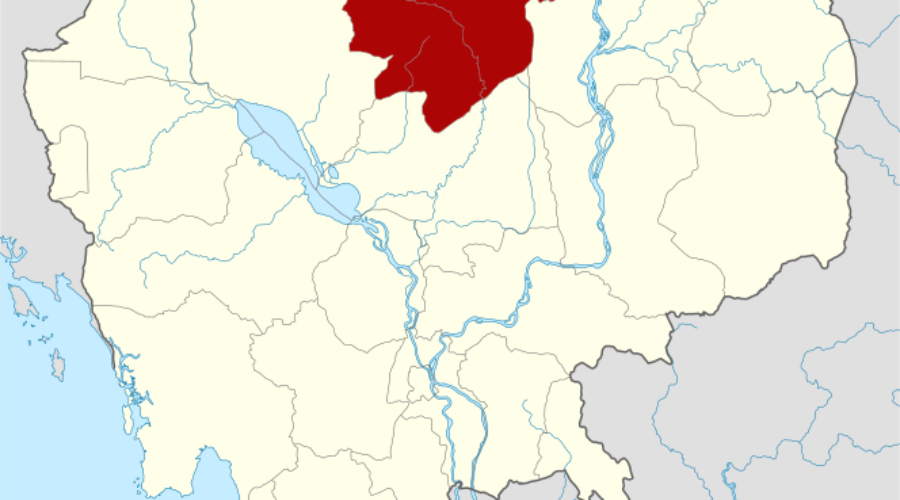
Preah Vihear Province is located in northern Cambodia along the Dangrek Mountains and the border with Thailand. It is one of Cambodia’s most historically significant provinces, particularly because it contains several important archaeological landscapes associated with the Khmer Empire.
The province is best known internationally for Preah Vihear Temple, a spectacular Khmer sanctuary positioned dramatically on a cliff overlooking the Cambodian plains. The temple was inscribed on the UNESCO World Heritage List in 2008.
However, Preah Vihear Province offers much more than the famous temple. Its attractions include:
The province is best known internationally for Preah Vihear Temple, a spectacular Khmer sanctuary positioned dramatically on a cliff overlooking the Cambodian plains. The temple was inscribed on the UNESCO World Heritage List in 2008.
However, Preah Vihear Province offers much more than the famous temple. Its attractions include:
- Preah Vihear Temple
- Kaoh Ker
- Prasat Preah Khan of Kampong Svay
- Kulen Prum Tep Wildlife Sanctuary
- Ancient Khmer temples and archaeological sites
- Dangrek Mountain landscapes
- Forests and wildlife
- Traditional villages and rural Cambodian life
What makes the province especially interesting is the way ancient Khmer history, dramatic mountain scenery, archaeology, religion and modern Cambodian history come together.
2. The Geography of Preah Vihear
Preah Vihear Province occupies a large area of northern Cambodia. Much of its northern boundary follows the Dangrek Mountains, which form a natural geographic barrier between Cambodia and Thailand.
The province contains a mixture of:
- Mountain ranges
- Forests
- Agricultural plains
- Rivers and streams
- Archaeological sites
- Wildlife habitats
- Remote rural communities
The location of the province was historically important because the mountains provided both natural protection and elevated locations for religious sanctuaries.
Preah Vihear Temple is the clearest example: the sanctuary was constructed on a dramatic promontory overlooking the Cambodian plain. UNESCO emphasizes that the temple’s architecture is inseparable from its spectacular natural setting.
3. Ancient History of the Province
The history of Preah Vihear extends back more than a thousand years.
During the development of the Khmer Empire, northern Cambodia became an important region connecting the central Khmer heartland with territories toward the Dangrek Mountains and present-day Thailand.
The ancient Khmer rulers constructed temples, roads, reservoirs and religious settlements throughout the region.
The temples were not built randomly. They were often positioned according to religious and political concepts involving:
- Sacred mountains
- Water
- Hindu cosmology
- Royal authority
- Pilgrimage routes
- Connections between earthly and divine realms
Preah Vihear Temple is an especially strong example of this relationship between religion, landscape and royal power.
4. The Early History of Preah Vihear Temple
The history of the temple itself goes back to at least the 9th century.
UNESCO explains that an early hermitage existed at the site in the 9th century, before the great stone sanctuary was developed. The present architectural complex was constructed and modified over several centuries, particularly around the 11th century.
The temple was dedicated to Shiva, one of the principal deities of Hinduism.
Its sacred identity is reflected in its ancient name and religious architecture.
The location was particularly appropriate for a Shiva sanctuary because the mountain environment itself was regarded as sacred.
5. Development Under the Khmer Kings
The temple was gradually expanded by successive Khmer rulers.
UNESCO notes that the complex developed progressively from an early hermitage into a long sequence of sanctuaries connected by approximately 800 metres of stairways, pavements and courtyards.
One of the most important rulers associated with the temple is King Suryavarman I, whose reign in the early 11th century coincided with the construction of significant portions of the existing sanctuary.
Later Khmer rulers continued to modify and develop the temple complex.
The result is not a single building constructed at one moment, but rather a religious architectural complex developed over several centuries.
6. Why Preah Vihear Temple Is Architecturally Unique
One of the most remarkable things about Preah Vihear is its layout.
Many famous Khmer temples, particularly those around Angkor, are constructed on relatively flat terrain.
Preah Vihear is very different.
The temple extends along a mountain ridge and rises gradually toward its central sanctuary.
Visitors pass through a sequence of:
- Stairways
- Long avenues
- Naga balustrades
- Gopuras or gateway structures
- Courtyards
- Sanctuaries
The entire complex extends for approximately 800 metres.
The architecture therefore creates a symbolic journey from the lower landscape toward the sacred summit.
7. The Five Gopuras
One of the most memorable features of Preah Vihear is its series of monumental gopuras, or gateway buildings.
The visitor gradually moves through these architectural gateways toward the central sanctuary.
Each gateway provides a different perspective on the temple and surrounding landscape.
The progression creates a sense of movement:
Mountain → Stairway → Naga → Gopura → Courtyard → Sanctuary
This is one reason UNESCO considers the relationship between the architecture and its natural setting an outstanding example of Khmer architectural achievement.
8. The View from Preah Vihear
The panoramic view is one of the temple’s greatest attractions.
Because the sanctuary sits on the edge of the Dangrek escarpment, visitors can look southward across the Cambodian plains.
The elevated position makes it possible to appreciate why the Khmer architects selected this location.
UNESCO describes the temple as occupying a cliff-top location with extensive views across the plains below.
The combination of ancient stone architecture and vast landscape is one of the most distinctive features of the site.
9. Preah Vihear and the Cambodian-Thai Border
Preah Vihear also has an important modern political and legal history.
During the colonial period, agreements between France and Siam in 1904 and 1907 helped establish the modern boundary arrangements in the region.
The status of the temple subsequently became the subject of a major dispute between Cambodia and Thailand.
In 1962, the International Court of Justice (ICJ) ruled that the Temple of Preah Vihear was situated under Cambodian sovereignty.
The temple was later inscribed on UNESCO’s World Heritage List in 2008. World Heritage Centre
The surrounding border area subsequently experienced periods of tension and armed clashes, particularly in the late 2000s and early 2010s.
This modern history is important when visiting the temple because Preah Vihear is simultaneously:
The temple was dedicated to Shiva, one of the principal deities of Hinduism.
5. Development Under the Khmer Kings
6. Why Preah Vihear Temple Is Architecturally Unique
- Stairways
- Long avenues
- Naga balustrades
- Gopuras or gateway structures
- Courtyards
- Sanctuaries
- An ancient religious monument
- An archaeological site
- A UNESCO World Heritage Site
- A symbol of Cambodian heritage
- A location connected with modern border history
10. Koh Ker — Another Ancient Capital
One of the most important archaeological attractions in Preah Vihear Province is Koh Ker.
Koh Ker was an important capital of the Khmer Empire during the 10th century.
UNESCO explains that King Jayavarman IV established Koh Ker as a royal capital, and it served as the empire’s principal capital from approximately 921/928 to 944 CE.
This makes Koh Ker particularly important because it represents a period when the political center of the Khmer Empire was temporarily moved away from Angkor.
11. Prasat Thom at Koh Ker
The most recognizable structure at Koh Ker is Prasat Thom, a huge stepped pyramid rising above the surrounding forest.
Its unusual pyramid design distinguishes it from many other Khmer temples.
The temple is constructed in several levels and provides an impressive example of the architectural experimentation that occurred during the Koh Ker period.
UNESCO describes Koh Ker as an exceptional example of innovative Khmer urban planning and construction, including the use of very large monolithic stone blocks.
12. The Koh Ker Archaeological Complex
Koh Ker is much larger than Prasat Thom.
The archaeological landscape contains numerous temples, sanctuaries, reservoirs, sculptures and other remains.
UNESCO describes it as a sacred urban ensemble containing temples, sculptures, inscriptions, wall paintings, archaeological remains and hydraulic structures.
The site is especially interesting for people who enjoy archaeology because it allows visitors to see a whole ancient urban landscape, rather than just one temple.
Koh Ker was inscribed on the UNESCO World Heritage List in 2023.
13. Koh Ker and Khmer Art
Koh Ker is particularly famous for its distinctive artistic style.
The Koh Ker style is characterized by powerful sculptures with dynamic movement and strong, expressive forms.
UNESCO notes that this artistic style developed during the relatively short period when Koh Ker functioned as a royal center, yet its influence continued into later Khmer art.
For visitors interested in Cambodian art history, Koh Ker is therefore extremely important.
14. Prasat Preah Khan of Kampong Svay
Another major archaeological site associated with the wider Preah Vihear region is Prasat Preah Khan of Kampong Svay.
It is one of the largest temple complexes in Cambodia and contains a substantial system of temples, walls, reservoirs and roads.
The site is sometimes referred to as Preah Khan Kompong Svay.
Its remote location contributes to its atmosphere and makes it particularly interesting for travelers who want to explore less-developed archaeological sites.
The complex is associated with the later Khmer Empire and is often discussed in connection with the reign and building program of Jayavarman VII.
15. Kulen Promtep Wildlife Sanctuary
Preah Vihear is not only about ancient temples.
The province also contains important protected forests and wildlife habitats.
The Kulen Promtep Wildlife Sanctuary is one of Cambodia’s significant protected areas.
Its landscape includes:
- Forest
- Wetlands
- Grasslands
- Rivers
- Seasonal water bodies
- Wildlife habitats
It forms part of the wider northern Cambodian landscape that remains important for biodiversity.
For travelers interested in nature, this provides a different experience from temple tourism.
16. Natural Landscapes of the Dangrek Mountains
The Dangrek Mountains are among Preah Vihear’s most visually impressive natural features.
The mountains create a dramatic contrast with the flat Cambodian plains below.
The landscape includes:
- Cliffs
- Forests
- Rocky outcrops
- Mountain viewpoints
- Waterfalls and streams
- Wildlife habitats
The relationship between the mountains and ancient Khmer temples is particularly important.
At Preah Vihear, the natural landscape is effectively part of the monument itself.
17. Phnom Tbeng Natural Area
Phnom Tbeng and surrounding mountain landscapes provide opportunities for hiking and nature-based tourism.
The area contains forests, waterfalls and mountain scenery and is increasingly relevant to ecotourism.
Such areas demonstrate that Preah Vihear Province can offer experiences beyond the major archaeological sites.
18. Local Villages and Rural Life
A journey through Preah Vihear Province also provides an opportunity to observe traditional rural Cambodia.
Many communities depend on:
- Rice cultivation
- Cassava and other crops
- Livestock
- Forest resources
- Small-scale trade
The province is less urbanized than Phnom Penh or Siem Reap, and many areas retain a strong rural character.
This makes traveling through the province interesting for visitors who want to see everyday Cambodian life outside the major tourist centers.
19. Buddhist Culture
Although many of Preah Vihear’s most famous monuments were originally Hindu temples, Buddhism is now deeply integrated into local life.
Visitors can find Buddhist pagodas and religious communities throughout the province.
The modern religious landscape reflects the continuity and transformation of Cambodian religious culture:
Ancient Hindu temples → later Buddhist influence → contemporary Cambodian Buddhism
This mixture is visible at many archaeological sites where modern Buddhist shrines exist close to much older Khmer monuments.
20. Preah Vihear’s Archaeological Importance
The province is particularly valuable for understanding the Khmer Empire because its monuments represent different periods of Khmer civilization.
For example:
| Site | Historical significance |
|---|---|
| Preah Vihear | Major Shiva sanctuary developed from the 9th century onward |
| Koh Ker | Royal capital in the 10th century |
| Prasat Preah Khan of Kampong Svay | Large later Khmer-period complex |
| Other mountain temples | Religious and regional centers |
| Rural archaeological sites | Evidence of settlement and water management |
Together, these sites demonstrate that Khmer civilization was not concentrated exclusively around Angkor.
21. The Role of Water in Ancient Khmer Civilization
Water was fundamental to Khmer civilization.
Ancient Khmer cities and temples often incorporated:
- Reservoirs
- Barays
- Moats
- Canals
- Ponds
- Dams
These systems supported agriculture and also had religious and symbolic meanings.
Koh Ker, for example, contains archaeological evidence of hydraulic infrastructure, while other Khmer temple complexes in the region are associated with reservoirs and water management. UNESCO specifically identifies hydraulic structures as part of the Koh Ker archaeological landscape.
This illustrates that Khmer temple construction was closely connected with agriculture, settlement and environmental management.
22. The Province During the 20th Century
Preah Vihear’s remote location meant that it was less urbanized than many Cambodian provinces.
However, it was heavily affected by Cambodia’s wars during the second half of the twentieth century.
The mountains and forests provided strategic territory for armed groups, and some parts of the province remained affected by conflict and landmines for decades.
This history also helps explain why some archaeological sites remained relatively isolated and less developed than Angkor.
23. The Khmer Rouge and Later Conflict
The Khmer Rouge established strongholds in parts of northern Cambodia after the fall of its government in 1979.
The remote forests and mountains around Preah Vihear were particularly suitable for guerrilla warfare.
As a result, some areas remained insecure long after the Khmer Rouge government had been removed from power.
This affected:
- Archaeological research
- Tourism
- Infrastructure
- Agriculture
- Local development
The return of peace in the 1990s and subsequent demining allowed greater access to the province.
24. Preah Vihear Today
Today, Preah Vihear is increasingly important for heritage and ecotourism.
The province’s tourism potential is based on three major strengths:
1. World-class archaeology
Preah Vihear Temple and Koh Ker provide internationally significant examples of Khmer civilization.
2. Natural landscapes
Mountains, forests and wildlife provide opportunities for ecotourism.
3. Rural and cultural experiences
Visitors can experience traditional villages, agriculture and Cambodian religious life.
25. Major Attractions at a Glance
| Attraction | Main importance |
|---|---|
| Preah Vihear Temple | UNESCO World Heritage, Khmer architecture and mountain views |
| Koh Ker | Ancient Khmer capital and UNESCO World Heritage Site |
| Prasat Thom | Monumental stepped pyramid at Koh Ker |
| Prasat Preah Khan of Kampong Svay | Large Khmer archaeological complex |
| Kulen Promtep Wildlife Sanctuary | Forest and biodiversity |
| Dangrek Mountains | Dramatic landscapes and viewpoints |
| Phnom Tbeng | Mountain and ecotourism |
| Local pagodas | Contemporary Buddhist culture |
| Rural villages | Traditional Cambodian life |
| Archaeological sites | Ancient Khmer history |
26. Suggested 2-Day Preah Vihear Itinerary
Day 1 — Preah Vihear Temple
Morning
Travel toward the Dangrek Mountains and visit Preah Vihear Temple.
Allow sufficient time to walk through the sequence of stairways, naga balustrades, gopuras and courtyards.
Pay particular attention to the carved sandstone decoration.
Midday
Reach the upper sanctuary and spend time appreciating the panoramic views over Cambodia.
Afternoon
Explore the surrounding mountain landscape and learn about the temple’s history and its relationship with the modern Cambodian-Thai border.
Evening
Return to accommodation in the surrounding area.
27. Day 2 — Koh Ker and Archaeology
Morning
Travel to Koh Ker, the former Khmer capital.
Explore:
- Prasat Thom
- Smaller surrounding temples
- Ancient reservoirs
- Sculptural remains
- Archaeological landscape
Afternoon
Continue exploring the Koh Ker complex or visit another archaeological site in the region.
Evening
Return to your accommodation.
For travelers with additional time, the itinerary can be extended to include Prasat Preah Khan of Kampong Svay and natural areas.
28. Preah Vihear Compared with Other Cambodian Destinations
Preah Vihear offers a different experience from Cambodia’s more famous tourist destinations.
| Destination | Main character |
|---|---|
| Siem Reap | Angkor and major international tourism |
| Phnom Penh | Capital, history and urban culture |
| Battambang | Colonial town, countryside and arts |
| Kampot | River, pepper, Bokor and colonial heritage |
| Kep | Coast, seafood and quiet resort atmosphere |
| Sihanoukville | Port, beaches and islands |
| Preah Vihear | Ancient temples, mountains, archaeology and nature |
The province is especially suitable for visitors interested in history and archaeology combined with dramatic landscapes.
29. Why Preah Vihear Is Important to Cambodia
Preah Vihear Province represents several important aspects of Cambodian history.
Ancient civilization
The province contains extraordinary evidence of the Khmer Empire’s architecture, religion, art and urban development.
Sacred geography
Preah Vihear demonstrates how Khmer architects integrated temples with mountains and natural landscapes.
Political history
Koh Ker illustrates the changing political centers of the Khmer Empire.
Modern history
The border history of Preah Vihear Temple reflects Cambodia’s complicated twentieth-century relationship with its neighbors and the legacy of colonial-era borders.
Natural heritage
The forests and mountains provide important habitats for Cambodia’s biodiversity.
Cultural identity
The temples remain powerful symbols of Cambodian heritage and identity.
30. Conclusion
Preah Vihear Province is one of Cambodia’s most important destinations for understanding Khmer civilization outside the Angkor region.
Its greatest attraction, Preah Vihear Temple, is an extraordinary example of Khmer architecture because the monument and the mountain are inseparable. The temple developed from an early sacred site in the 9th century and evolved over subsequent centuries into an approximately 800-metre-long architectural complex dedicated to Shiva. UNESCO describes it as an outstanding masterpiece of Khmer architecture and inscribed it as a World Heritage Site in 2008.
The province’s second major archaeological treasure is Koh Ker, the extraordinary 10th-century capital established by Jayavarman IV. Its monumental stepped pyramid, numerous temples, sculptures and hydraulic remains demonstrate a distinctive period of experimentation in Khmer architecture and art. Koh Ker was inscribed on the UNESCO World Heritage List in 2023.
Beyond these monuments, Preah Vihear offers Dangrek Mountain scenery, forests, wildlife sanctuaries, rural villages and other ancient temples. This combination makes the province particularly valuable for travelers who want to explore Cambodia beyond Angkor.
In short, Preah Vihear is a province where sacred mountains, ancient Khmer architecture, archaeological discovery, Cambodian history and natural landscapes come together. It provides not only beautiful places to visit but also an opportunity to understand how religion, royal power, landscape and engineering shaped one of Southeast Asia’s great civilizations.
You’ll get smarter responses and can upload files, images, and more.Log inSign up for free