Battambang
Battambang Province: History, Culture, and Major Attractions
1. Introduction
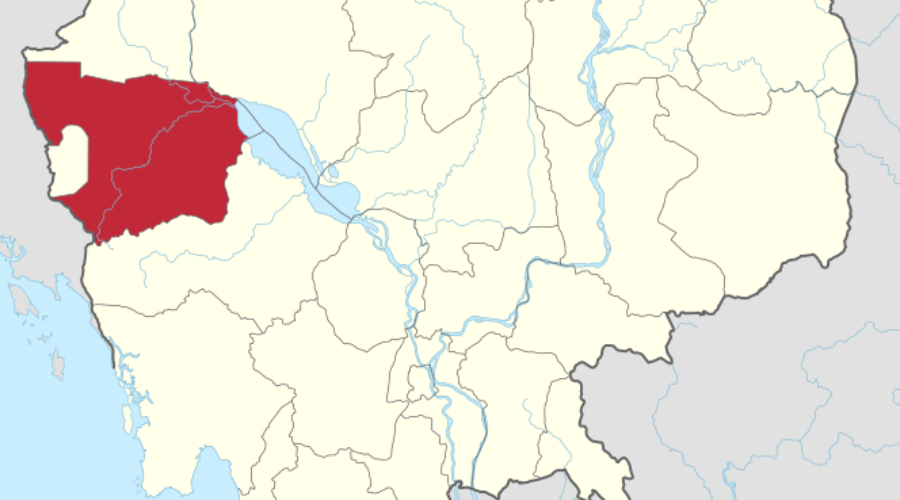
Battambang Province is one of Cambodia’s most historically and culturally important provinces. Located in northwestern Cambodia, it borders Thailand to the west and is connected to the Tonlé Sap region and Cambodia’s central plains. The provincial capital, Battambang, lies along the Sangker River and is Cambodia’s second-largest city. The province has historically been one of the country’s most important rice-producing areas.
Battambang is particularly attractive because it brings together several different aspects of Cambodia:
- Ancient Khmer temples
- French colonial architecture
- Traditional Cambodian villages
- Rice farming and agriculture
- Buddhist culture
- River landscapes
- Caves and mountains
- Modern Cambodian history
- Khmer Rouge memorial sites
- Traditional arts and crafts
- The famous bamboo train experience
The province therefore offers much more than a single sightseeing attraction. It provides an opportunity to understand Cambodia’s ancient history, colonial period, agricultural traditions, wars, and contemporary cultural revival in one region.
2. The Meaning and Legend of the Name “Battambang”
The name Battambang is traditionally associated with the Khmer legend of Preah Bat Dambang Kranhoung, often translated as the “Black-Stick King.”
According to the legend, a man named Dambang used a magical black stick to gain power and eventually became a powerful ruler. The story became closely associated with the area and gave rise to the name Battambang, traditionally interpreted as relating to the loss or disappearance of a stick.
The story remains an important part of local cultural identity.
Visitors can also see a monument dedicated to Lok Ta Dambong Kra Nhoung in Battambang city, representing the legendary figure.
Lok Ta Dambong Kra Nhoung★ 4.5 · Tourist attraction · Open
3. Ancient History of Battambang
Battambang has a very long history that extends back well before the French colonial period.
The province contains numerous archaeological remains from the Angkorian and pre-Angkorian periods, including temples, reservoirs, inscriptions and religious monuments.
The region’s fertile plains were particularly suitable for agriculture. Its location between the Cambodian interior, the Tonlé Sap basin and Thailand also made it important for trade and communication.
Some of the most important ancient sites include:
- Phnom Banan
- Wat Ek Phnom
- Baset Temple
- Prasat Sneung
- Phnom Sampeau and surrounding religious sites
These monuments demonstrate that Battambang was closely connected with the development of Khmer civilization.
4. Battambang Under Siamese/Thai Rule
One of the most important parts of Battambang’s history is its relationship with Siam (present-day Thailand).
For several centuries, control over northwestern Cambodian territories shifted between Cambodian and Siamese authorities.
Tourism Cambodia records that Battambang was acquired by Thailand in 1809 and returned to Cambodia in 1907.
This period left a distinctive cultural influence on the province.
Even today, Battambang has connections with Thai culture in areas such as:
5. Battambang Returns to Cambodia in 1907
A major turning point came in 1907, when Battambang and several other territories were transferred from Siam to French-controlled Cambodia.
This happened as part of French-Siamese diplomatic agreements.
The return of Battambang to Cambodia marked the beginning of another major chapter in the province’s history.
6. The French Colonial Period
- Language
- Food
- Trade
- Architecture
- Family connections
- Cross-border commerce
However, the region remains strongly Khmer in its cultural identity.
5. Battambang Returns to Cambodia in 1907
A major turning point came in 1907, when Battambang and several other territories were transferred from Siam to French-controlled Cambodia.
This happened as part of French-Siamese diplomatic agreements.
The return of Battambang to Cambodia marked the beginning of another major chapter in the province’s history.
Under French administration, the town was modernized and developed as a regional administrative and commercial center.
6. The French Colonial Period
The French colonial period had a particularly visible impact on Battambang city.
The town developed as a river-based commercial center, with roads, administrative buildings, markets, bridges and commercial houses.
Today, the old center of Battambang contains some of Cambodia’s best-preserved examples of French colonial and Sino-Khmer architecture. Tourism Cambodia specifically identifies the city’s old French shop houses and riverside architecture as among its principal attractions.
The historic buildings commonly feature:
- Shuttered windows
- Balconies
- Decorative facades
- Narrow shop-house layouts
- Chinese architectural influences
- French colonial design
A walk through the old city therefore provides an architectural history lesson without requiring a formal museum.
7. Battambang as Cambodia’s Rice Basket
One of Battambang’s most important historical identities is its role as a major rice-producing region.
The province contains broad, fertile agricultural plains and has traditionally been one of Cambodia’s most productive rice-growing areas.
The Sangker River and surrounding waterways have supported agriculture for centuries.
Rice production has influenced:
- Local settlement patterns
- Traditional houses
- Rural livelihoods
- Food culture
- Trade
- Transportation
- The economic importance of Battambang
Tourism Cambodia describes Battambang as one of Cambodia’s major rice-growing regions and notes its historic importance as a leading rice-producing province.
For this reason, exploring the countryside around Battambang can be just as meaningful as visiting its temples.
8. Battambang During the Independence Period
Cambodia gained independence from France in 1953.
During the 1950s and 1960s, Battambang continued to develop as an agricultural and commercial center.
The province benefited from improvements to transportation and infrastructure and remained one of the country’s major food-producing regions.
This was also a period when Cambodia experienced significant cultural and architectural development.
Battambang’s schools, markets, administrative buildings and cultural institutions expanded, while the surrounding countryside continued to supply rice and other agricultural products.
9. The Civil War and Khmer Rouge Period
The twentieth century also brought great suffering to Battambang.
Cambodia entered a period of civil war and political instability in the late 1960s and early 1970s.
Because Battambang was strategically important for agriculture and transportation, the province became heavily affected by the conflict.
After the Khmer Rouge took power in 1975, Battambang experienced severe disruption.
People were forcibly displaced, agricultural production was reorganized under the Khmer Rouge system, and many people in the province were killed or subjected to forced labor.
The province also became an important area of Khmer Rouge activity following the fall of the regime in 1979.
Tourism Cambodia notes that Battambang remained a major Khmer Rouge stronghold in northwestern Cambodia during the subsequent conflict.
10. Battambang After 1979
Following the Vietnamese intervention that removed the Khmer Rouge government from Phnom Penh in 1979, conflict continued in parts of northwestern Cambodia.
Battambang was among the areas affected by the continuing conflict.
The province gradually returned to stability in the 1990s as the political and military situation improved.
This history is important when visiting Battambang because some attractions are not merely scenic places—they are also memorial sites connected to Cambodia’s modern history.
11. Battambang Today
Today, Battambang is a relatively peaceful provincial city with a strong connection to its agricultural surroundings.
The city retains much of its historic character while also developing a growing tourism and creative sector.
Its attractions can broadly be divided into:
Historical and cultural attractions
- Colonial buildings
- Wat Kampheng
- Wat Kor
- Battambang Museum
- Ancient Khmer temples
Natural attractions
- Phnom Sampeau
- Phnom Banan
- Caves
- Rice fields
- Sangker River
Rural and traditional experiences
- Rice farming
- Traditional houses
- Local food
- Fruit and agricultural production
- Craft villages
Historical memorials
- Killing caves
- Wat Samrong Knong
- Khmer Rouge memorial sites
12. Battambang Old Town
The old town is one of Battambang’s most attractive areas.
The city center contains a collection of historic buildings along and near the Sangker River.
Visitors can walk through the streets to observe the combination of:
- French colonial architecture
- Chinese shophouses
- Traditional Khmer buildings
- Buddhist temples
- Modern Cambodian businesses
This mixture reflects Battambang’s complicated history as a crossroads between Cambodia, Thailand, China and France.
A walking or cycling tour through the old city is particularly useful because many historic buildings are relatively close together.
13. Sangker River
The Sangker River is central to Battambang’s identity.
The river passes through the city and continues southward through the agricultural countryside toward the Tonlé Sap system.
Historically, it served as:
- A transportation route
- A source of water
- A fishing area
- An agricultural resource
- A commercial route
Today, the riverside is one of the most pleasant areas for visitors.
River activities can include:
- Walking
- Cycling
- Boat trips
- Photography
- Watching local life
- Sunset viewing
Tourism Cambodia describes the river as a tranquil waterway winding through the province and lists river sightseeing among the city’s attractions.
14. Battambang Provincial Museum
The Battambang Provincial Museum is useful for understanding the ancient history of the region.
Its collection includes archaeological material from the surrounding area, particularly objects associated with the Angkorian period.
The museum helps put the nearby temples into historical context.
Rather than viewing the temples simply as isolated ruins, visitors can learn about:
- Khmer religious traditions
- Sculpture
- Ancient architecture
- Hinduism and Buddhism
- Regional archaeology
10. Battambang After 1979
The province gradually returned to stability in the 1990s as the political and military situation improved.
This history is important when visiting Battambang because some attractions are not merely scenic places—they are also memorial sites connected to Cambodia’s modern history.
11. Battambang Today
Its attractions can broadly be divided into:
Historical and cultural attractions
- Colonial buildings
- Wat Kampheng
- Wat Kor
- Battambang Museum
- Ancient Khmer temples
Natural attractions
- Phnom Sampeau
- Phnom Banan
- Caves
- Rice fields
- Sangker River
Rural and traditional experiences
- Rice farming
- Traditional houses
- Local food
- Fruit and agricultural production
- Craft villages
Rather than viewing the temples simply as isolated ruins, visitors can learn about:
- Khmer religious traditions
- Sculpture
- Ancient architecture
- Hinduism and Buddhism
- Regional archaeology
15. Wat Ek Phnom
One of its most interesting features is the contrast between:
the ancient ruined temple
This combination demonstrates how Cambodia’s religious landscape has continued to evolve while retaining connections with the ancient past.
16. Phnom Banan
15. Wat Ek Phnom
Wat Ek Phnom is one of Battambang’s most important ancient temples.
The ruins lie approximately 10–14 km north of Battambang city, depending on the route.
The temple is associated with the 11th century and is surrounded by remnants of a laterite enclosure and an ancient reservoir.
One of its most interesting features is the contrast between:
the ancient ruined temple
and
the modern Buddhist temple nearby.
This combination demonstrates how Cambodia’s religious landscape has continued to evolve while retaining connections with the ancient past.
Wat Ek Phnom is also a popular local pilgrimage and festival site.
16. Phnom Banan
Phnom Banan is another major historical attraction.
Atop the mountain stands an Angkorian-era temple with several towers.
The temple’s history spans different periods of Khmer architecture, with construction associated with the reigns of Udayadityavarman II and Jayavarman VII.
Visitors must climb a long staircase to reach the temple.
The climb is worthwhile because the summit provides impressive views of:
- Rice fields
- Palm trees
- Villages
- The Sangker River
- Surrounding mountains
Phnom Banan therefore combines archaeology, religion and landscape.
17. Phnom Sampeau
Phnom Sampeau, sometimes translated as “Ship Mountain,” is one of Battambang’s most famous attractions.
It is a limestone mountain approximately 12 km southwest of Battambang city.
The mountain contains:
18. Phnom Sampeau and the Khmer Rouge Memorial
Phnom Sampeau is also a place of remembrance.
During the Khmer Rouge period, caves on the mountain were used as sites of execution.
19. The Bat Cave
The phenomenon can continue for a considerable period and creates a remarkable moving stream of bats across the sky.
This has become one of Battambang’s most recognizable evening experiences.
20. Wat Samrong Knong
21. The Bamboo Train
The Bamboo Train, locally known as norry, became one of Battambang’s most famous tourism experiences.
It became famous because the system was extremely simple and flexible.
Tourists enjoyed the experience of traveling through the countryside on the railway.
The original tourist bamboo-train operation was moved after regular railway services were restored, and a new tourist route was established near Phnom Banan. Tourism Cambodia reported the new operation beginning in 2018.
The current experience should therefore not be confused with the historic railway system that once served local transportation needs.
- Buddhist temples
- Natural caves
- Religious shrines
- Viewpoints
- Historical memorial sites
- Bat caves
Tourism Cambodia identifies Phnom Sampeau as a mountain approximately 100 metres high with several natural caves and Buddhist sites.
18. Phnom Sampeau and the Khmer Rouge Memorial
Phnom Sampeau is also a place of remembrance.
During the Khmer Rouge period, caves on the mountain were used as sites of execution.
The remains of victims are preserved at some of these locations, making the caves important memorial sites.
Visitors should approach this part of Phnom Sampeau respectfully. It is not simply a tourist attraction but a place associated with mass suffering and remembrance.
The mountain also has surviving military structures from later conflicts, reflecting its strategic importance during Cambodia’s decades of warfare.
19. The Bat Cave
One of the most spectacular natural experiences near Phnom Sampeau takes place around sunset.
Millions of bats emerge from caves in the mountain and fly into the surrounding countryside to feed.
The phenomenon can continue for a considerable period and creates a remarkable moving stream of bats across the sky.
This has become one of Battambang’s most recognizable evening experiences.
The bat flight is especially interesting because it combines wildlife, landscape and local tourism in a single experience.
20. Wat Samrong Knong
Wat Samrong Knong is both a Buddhist temple and an important memorial site.
The site has historical connections with the Khmer Rouge period, and a memorial commemorates people who died there.
The contrast between the peaceful Buddhist environment and the site’s tragic history makes it an important place for understanding Cambodia’s recent past.
Wat Samrong Knong★ 4.5 · Tourist attraction
21. The Bamboo Train
The Bamboo Train, locally known as norry, became one of Battambang’s most famous tourism experiences.
The original bamboo train developed from Cambodia’s unusual railway system, using a simple bamboo platform mounted on wheels and powered by a small engine.
It became famous because the system was extremely simple and flexible.
Tourists enjoyed the experience of traveling through the countryside on the railway.
The original tourist bamboo-train operation was moved after regular railway services were restored, and a new tourist route was established near Phnom Banan. Tourism Cambodia reported the new operation beginning in 2018.
The current experience should therefore not be confused with the historic railway system that once served local transportation needs.
22. Traditional Villages and Rural Life
One of the best ways to understand Battambang is to leave the city and visit the countryside.
The surrounding villages contain:
- Rice fields
- Traditional Khmer houses
- Palm trees
- Small farms
- Fruit plantations
- Local markets
- Buddhist pagodas
- Agricultural workshops
Battambang’s countryside provides an excellent opportunity to observe the relationship between Cambodian communities and agriculture.
23. Traditional Khmer Houses
The province is also known for traditional wooden houses.
Many traditional houses are raised above the ground, providing ventilation and protection from seasonal flooding.
Some have elaborate wooden details and large open verandas.
These houses are valuable examples of Cambodia’s rural architectural heritage.
A visit to an old house such as Mrs. Bun Roeung’s Ancient House provides an opportunity to see traditional domestic architecture and learn about local family life.
Mrs. Bun Roeung’s Ancient House
Some have elaborate wooden details and large open verandas.
24. Local Arts and Circus
Battambang has developed an especially strong reputation for arts and cultural performance.
One of the best-known institutions is Phare Ponleu Selpak, an arts organization founded in Battambang that works with Cambodian young people and artists.
Its work includes:
During the appropriate season, visitors can see extensive rice fields stretching across the plains.
The landscape is characterized by:
There are eastern and western temple sites, including a brick temple situated on a hill.
The temples are less visited than Phnom Banan or Wat Ek Phnom, which can make them attractive to visitors interested in archaeological sites away from the main tourist routes. Tourism Cambodia lists both the eastern and western Sneung temple areas among Battambang’s attractions.
27. Baset Temple
Baset Temple is another ancient Khmer site.
It was constructed during the 11th century and is associated with the reign of Suryavarman I.
28. Battambang’s Food and Local Products
Battambang’s agricultural wealth has influenced its cuisine.
Local products include:★ 4.1 · Tourist attraction · Open
24. Local Arts and Circus
Battambang has developed an especially strong reputation for arts and cultural performance.
One of the best-known institutions is Phare Ponleu Selpak, an arts organization founded in Battambang that works with Cambodian young people and artists.
Its work includes:
- Circus
- Performing arts
- Visual arts
- Music
- Education
- Community development
This artistic identity has become an important part of modern Battambang.
It demonstrates that the province is not only about ancient temples and historical sites but also about contemporary Cambodian creativity.
25. Rice Fields and Agriculture
The agricultural landscape surrounding Battambang is one of its most important attractions.
During the appropriate season, visitors can see extensive rice fields stretching across the plains.
The landscape is characterized by:
- Rice paddies
- Sugar palms
- Ox carts and farm equipment
- Traditional houses
- Irrigation channels
- Small villages
The countryside helps explain why Battambang has historically been considered one of Cambodia’s major agricultural regions.
26. Prasat Sneung
Prasat Sneung consists of temple remains located in the Battambang area.
There are eastern and western temple sites, including a brick temple situated on a hill.
The temples are less visited than Phnom Banan or Wat Ek Phnom, which can make them attractive to visitors interested in archaeological sites away from the main tourist routes. Tourism Cambodia lists both the eastern and western Sneung temple areas among Battambang’s attractions.
27. Baset Temple
Baset Temple is another ancient Khmer site.
It was constructed during the 11th century and is associated with the reign of Suryavarman I.
The temple is located on a hill and is accompanied by an ancient pond or reservoir.
Tourism Cambodia notes the unusual fact that the pond retains water even during the dry season.
This site illustrates the importance of water management in ancient Khmer civilization.
28. Battambang’s Food and Local Products
Battambang’s agricultural wealth has influenced its cuisine.
Local products include:
- Rice
- Vegetables
- Fruits
- Palm sugar
- Fish
- Rice-based foods
- Traditional Cambodian sweets
The province’s agricultural communities also produce various traditional snacks and processed foods.
Visitors exploring the countryside can often see traditional food production alongside farming.
29. Why Battambang Is Historically Important
Battambang is particularly important because its history connects several different periods of Cambodian history.
| Period | Historical significance |
|---|---|
| Ancient period | Development of Khmer religious and agricultural settlements |
| 11th–12th centuries | Construction and development of major Khmer temples |
| 18th–19th centuries | Repeated changes in Cambodian and Siamese control |
| 1809 | Battambang comes under Siamese control |
| 1907 | Battambang returns to Cambodia under French administration |
| Early 20th century | Development as a regional commercial center |
| 1953 | Cambodia gains independence |
| 1950s–1960s | Agricultural and urban development |
| 1970s | Civil war and political instability |
| 1975–1979 | Khmer Rouge period and mass suffering |
| 1979–1990s | Continuing conflict and gradual recovery |
| 1990s–present | Peace, reconstruction and tourism development |
30. What Makes Battambang Different?
Battambang is different from Cambodia’s other major tourist destinations.
Siem Reap is internationally famous primarily because of Angkor.
Phnom Penh is Cambodia’s political and metropolitan center.
Sihanoukville is primarily associated with the coast, port and islands.
Kampot is known for its river, pepper, colonial atmosphere and Bokor Mountain.
Kep is associated with seafood, beaches, islands and its 20th-century resort heritage.
Battambang, by contrast, offers a particularly strong combination of:
Ancient Khmer heritage + colonial architecture + rural Cambodia + modern history + arts and culture.
That combination makes the province particularly valuable for visitors who want to understand how Cambodia has changed over many centuries.
31. Suggested 2-Day Battambang Itinerary
Day 1 — Battambang City and Countryside
Morning
Begin with a walking or cycling tour of Battambang’s old town.
Explore the colonial buildings, old shophouses, temples and Sangker River.
Visit the provincial museum if you want more historical context.
Late morning
Visit a traditional Khmer house such as Mrs. Bun Roeung’s Ancient House.
Afternoon
Travel toward Wat Ek Phnom.
Explore the ancient temple and the modern pagoda beside it.
Continue through the surrounding countryside and rice-growing areas.
Evening
Return toward Phnom Sampeau.
Around sunset, watch the spectacular bat flight emerging from the caves.
32. Day 2 — Phnom Banan and Phnom Sampeau
Morning
Travel to Phnom Banan.
Climb the staircase to the ancient temple and enjoy the views over the rice fields.
Midday
Explore the countryside around Banan and enjoy a local Cambodian lunch.
Afternoon
Continue to Phnom Sampeau.
Explore the Buddhist temples, caves and historical memorial sites.
Sunset
Find a safe viewpoint to watch the bats emerge from the mountain.
Evening
Return to Battambang and, if available, attend a contemporary Cambodian performance or circus show.
33. Key Attractions at a Glance
| Attraction | Main significance |
|---|---|
| Battambang Old Town | French colonial and Sino-Khmer architecture |
| Sangker River | River life, scenery and historical transport |
| Battambang Museum | Archaeology and Khmer history |
| Wat Ek Phnom | 11th-century Khmer temple |
| Phnom Banan | Angkorian temple and panoramic views |
| Phnom Sampeau | Caves, Buddhism, history and landscape |
| Killing Caves | Khmer Rouge memorial |
| Bat Cave | Spectacular natural wildlife experience |
| Wat Samrong Knong | Buddhist site and historical memorial |
| Bamboo Train | Unique railway tourism experience |
| Traditional villages | Rural Cambodian life |
| Rice fields | Agricultural heritage |
| Baset Temple | Ancient Khmer architecture |
| Prasat Sneung | Archaeological heritage |
| Phare Ponleu Selpak | Contemporary Cambodian arts |
34. Conclusion
Battambang Province is one of the best places in Cambodia for understanding the connection between history, agriculture, culture and everyday Cambodian life.
Its history stretches from the ancient Khmer kingdoms through centuries of interaction between Cambodia and Siam, the French colonial period, Cambodian independence, civil war, the Khmer Rouge era and the country’s eventual recovery.
At the same time, Battambang has preserved an unusually rich collection of attractions. Visitors can explore French colonial streets in the morning, ancient Khmer temples in the afternoon, traditional villages and rice fields during the day, and watch millions of bats emerge from Phnom Sampeau at sunset.
The province’s most important attractions include Battambang’s historic city center, Wat Ek Phnom, Phnom Banan, Phnom Sampeau, the Killing Caves, Wat Samrong Knong, the Sangker River, traditional Khmer houses, the Bamboo Train and the surrounding agricultural countryside.
Ultimately, Battambang’s greatest attraction is the combination of experiences. It is a destination where ancient Khmer civilization, colonial heritage, Cambodian agriculture, Buddhist culture, tragic modern history and contemporary Cambodian arts can all be encountered within the same province.